
Your eyelid keeps twitching. Your legs cramp up at night for no obvious reason. You’re wired at 11 p.m. but can’t drag yourself out of bed at 7. If you’ve searched “magnesium deficiency symptoms” or “why do I get muscle cramps at night,” you’re part of a bigger pattern than you probably realize — a large share of U.S. adults aren’t getting enough magnesium from food alone.
This guide covers what magnesium actually does, the early warning signs most people miss, why modern life makes deficiency more likely than ever, and what actually helps.
What Magnesium Actually Does in Your Body
Magnesium isn’t a niche nutrient — it’s involved in several hundred enzymatic processes, including how your cells produce energy, how your muscles contract and relax, how your nervous system stays regulated, and how your body manages its stress response. It works alongside calcium, potassium, and vitamin D to keep your heart rhythm steady and your bones strong.
Because it touches so many systems at once, a shortfall doesn’t show up as one clear symptom — it shows up as a cluster of things that seem unrelated until you connect the dots.
Early Signs You Might Be Running Low
Magnesium deficiency is notoriously easy to miss because your body holds onto its magnesium reserves until levels drop quite low. Common early signs include:
- Muscle cramps or twitches, especially in the calves at night
- Trouble falling or staying asleep, even when you’re exhausted
- Feeling wired, anxious, or unable to switch off mentally
- Low energy or fatigue that doesn’t match your activity level
- Tension headaches or a stiff neck and shoulders
- Irregular or noticeably strong heartbeat
- Sugar or salt cravings
If several of these sound familiar, it’s worth a conversation with your doctor — a simple blood test can check your levels, though it’s worth knowing that blood magnesium doesn’t always reflect what’s stored in your cells and tissues.
Why Magnesium Deficiency Is So Common Right Now
A few overlapping factors explain why this has become such a widespread issue:
1. Modern soil and food processing Magnesium content in produce has declined over recent decades due to farming practices, and refining grains strips out most of the magnesium they naturally contain.
2. Chronic stress Ongoing stress increases how much magnesium your body excretes through urine, creating a cycle where stress depletes magnesium and low magnesium makes it harder for your nervous system to regulate stress in the first place.
3. Caffeine and alcohol Both increase magnesium loss through the kidneys, which is part of why people who rely heavily on coffee to get through the day sometimes feel more depleted, not less.
4. Certain medications and conditions Some blood pressure medications, acid reflux treatments, and digestive conditions like IBS or celiac disease can interfere with magnesium absorption or increase how much your body loses.
5. Poor sleep Low magnesium disrupts deep sleep, and poor sleep in turn worsens magnesium status — another two-way cycle that’s easy to underestimate.
Who’s Most at Risk
People under chronic stress tend to burn through magnesium faster than their diet replaces it, especially with processed or irregular meals.
Anyone who trains hard or sweats heavily loses magnesium through perspiration, which is part of why athletes are more prone to cramping.
Adults over 40 often absorb magnesium less efficiently and may be on medications that compound the issue.
People with high caffeine or alcohol intake are quietly losing more magnesium than they’re taking in, even on a reasonably healthy diet.
Best Food Sources of Magnesium
Before considering a supplement, it’s worth maximizing what you get from food:
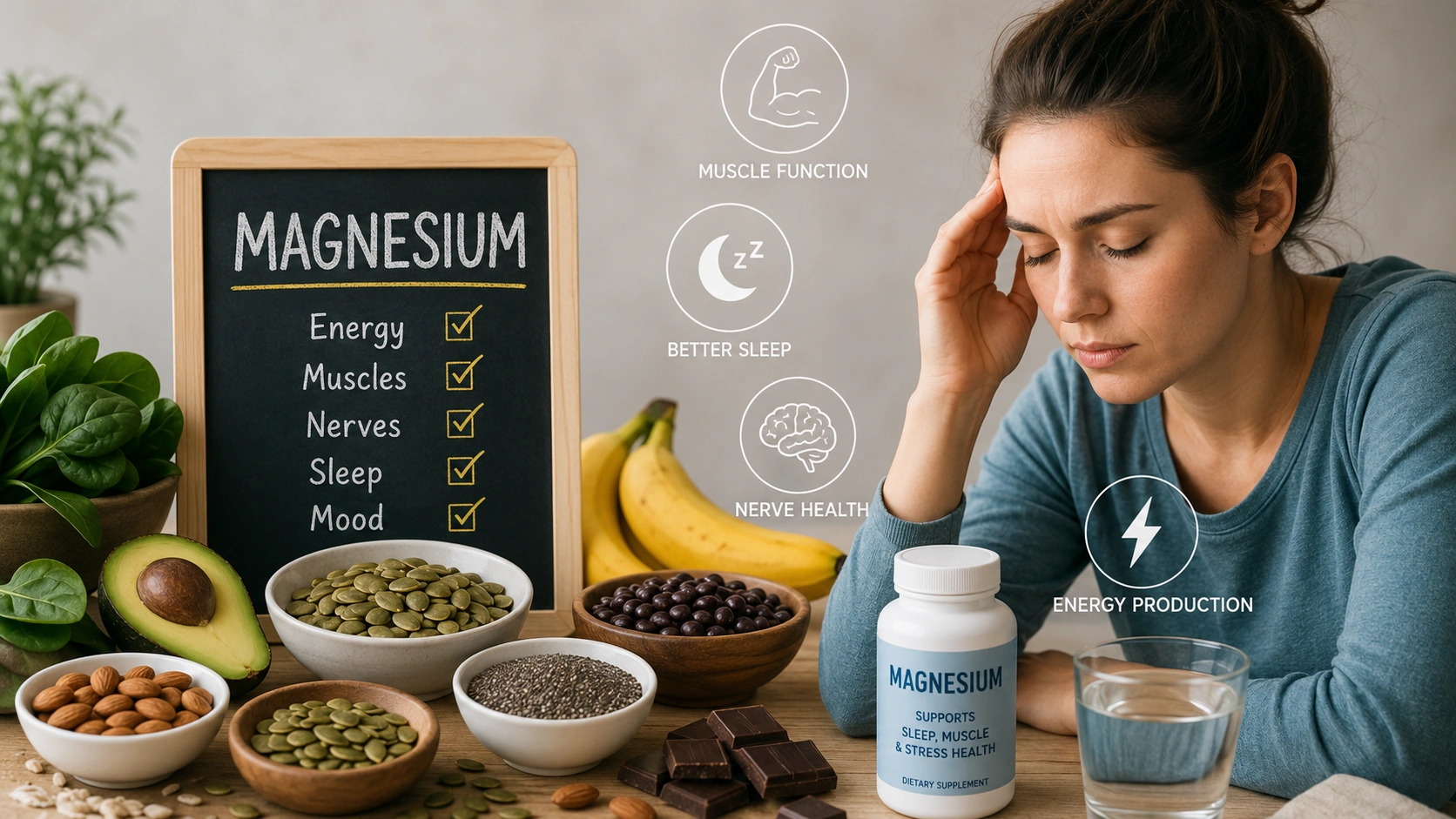
- Pumpkin seeds, chia seeds, and almonds
- Spinach and other leafy greens
- Black beans and other legumes
- Dark chocolate (70% cacao or higher)
- Avocado
- Whole grains like brown rice and quinoa
Most adults need somewhere in the range of 310–420 mg per day depending on age and sex, and the average American diet falls noticeably short of that — particularly for anyone eating a lot of processed food.
How to Choose a Magnesium Supplement (If Food Isn’t Enough)
Not all magnesium supplements are created equal, and the form matters more than most labels let on:
- Magnesium glycinate — well absorbed and gentle on digestion, often preferred for sleep and stress support
- Magnesium citrate — well absorbed but can have a laxative effect at higher doses
- Magnesium oxide — cheap and common, but poorly absorbed compared to other forms
- Avoid mega-dosing — more isn’t automatically better; excess magnesium from supplements (not food) can cause digestive upset
Since magnesium plays such a direct role in nervous system regulation, it’s worth pairing it with other stress-support strategies rather than treating it as a standalone fix. We’ve gone deeper into how the body’s stress response works, and where adaptogenic herbs fit in, in this piece on adaptogens for stress relief — a useful next read if chronic stress is part of what’s driving your magnesium loss in the first place.
Low magnesium and mental fog also tend to travel together, since both affect how efficiently your brain uses energy. If afternoon fatigue or trouble concentrating sounds familiar too, this breakdown of brain fog causes and natural remedies covers the cognitive side of this same picture in more detail.
For people specifically looking to support calm energy and focus throughout the day rather than just at bedtime, this guide to daily supplements for energy and focus is worth a look. And if you want to see what a full adaptogenic stress-support blend looks like ingredient by ingredient — since magnesium and adaptogens often work well together — this adaptogen formula breakdown walks through it. Some people prefer to pair a magnesium routine with a single daily liquid adaptogen shot rather than adding several separate supplements to their day.
FAQs — Magnesium Deficiency
What are the first signs of magnesium deficiency?
Early signs typically include muscle cramps or twitches, poor sleep, fatigue, and feeling anxious or unable to relax, often before more serious symptoms appear.
Can low magnesium cause anxiety?
Magnesium plays a direct role in regulating the nervous system, and low levels have been associated with increased anxiety and difficulty managing stress in several studies.
What’s the best magnesium for sleep?
Magnesium glycinate is commonly recommended for sleep because it’s well absorbed and doesn’t tend to cause the digestive upset some other forms can.
How long does it take to correct a magnesium deficiency?
Mild deficiency from diet alone often improves within a few weeks of consistent food or supplement changes, though severe deficiency should be corrected under medical supervision.
Can you get enough magnesium from food alone?
It’s possible, but modern processed diets make it genuinely difficult — prioritizing seeds, leafy greens, legumes, and whole grains daily is the best food-first approach.
Closing the Magnesium Gap — For Good
Magnesium deficiency rarely announces itself clearly — it shows up as cramping, restless sleep, low energy, and a nervous system that struggles to settle down, all of which are easy to blame on “just being busy.” Between processed diets, chronic stress, and everyday caffeine intake, it’s no surprise so many people are running a quiet deficit. Prioritizing magnesium-rich foods, addressing the stress side of the equation, and choosing a well-absorbed supplement when needed can make a noticeable difference in how you sleep, feel, and function day to day.
This content is for general wellness information and is not intended to diagnose, treat, cure, or prevent any disease. Talk to your doctor before starting any new supplement, especially if you’re on medication or managing an existing health condition.