

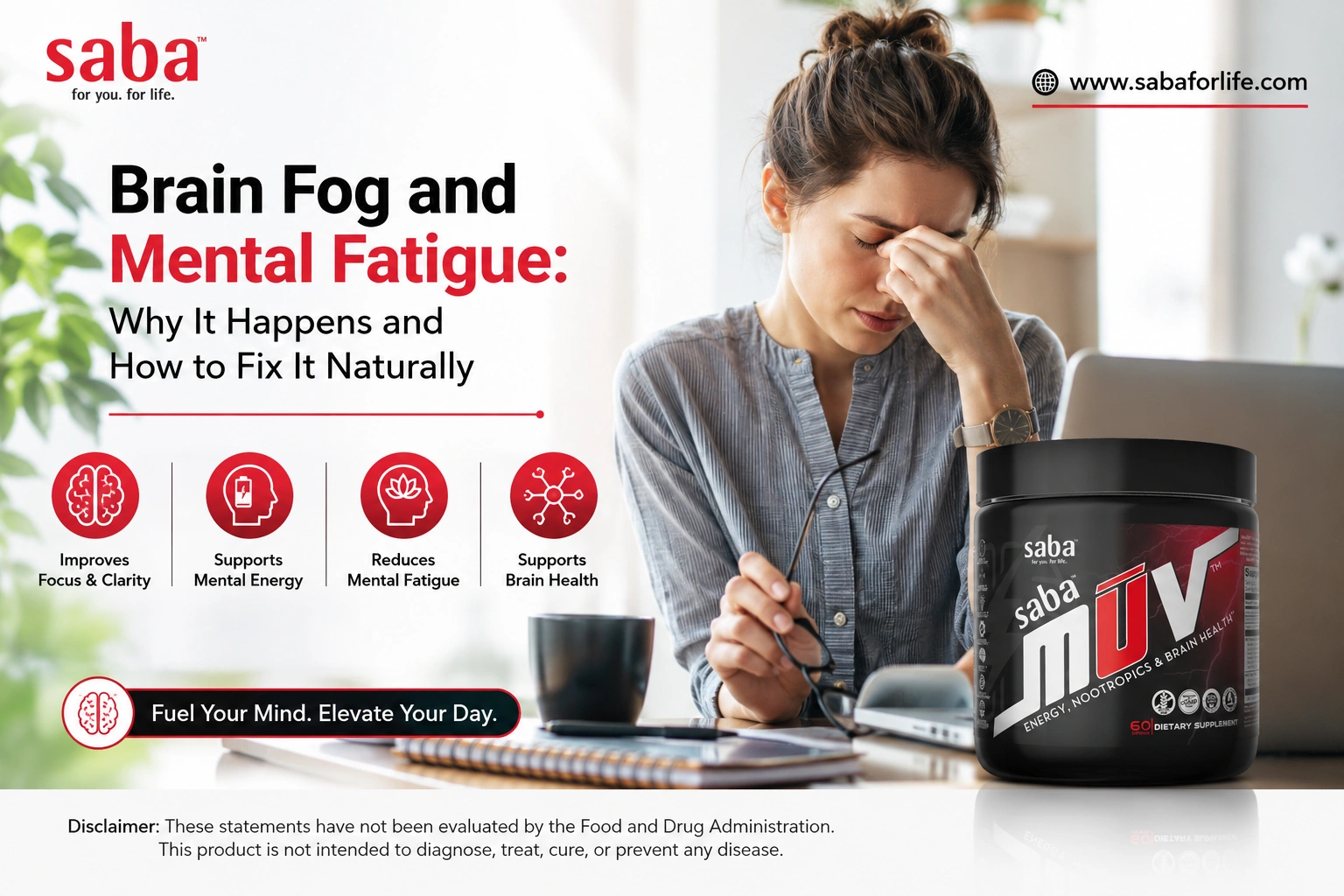
Brain Fog & Mental Fatigue- Why It Happens and Natural Ways to Improve Focus & Memory
You sit down to work, and your brain just… doesn’t show up. You reread the same paragraph three times. You forget why you walked into a room. You feel mentally exhausted by 2 PM even though you haven’t done anything physically demanding. If this sounds familiar, you’re dealing with one of the most commonly searched — and most misunderstood — health complaints today: brain fog.
This guide breaks down what’s actually causing it, how it’s different from normal tiredness, and what science-backed options can help restore mental clarity — without brand names, just practical information you can act on.
What Is Brain Fog, Really?
Brain fog isn’t a medical diagnosis — it’s a cluster of symptoms that describe reduced mental sharpness. People experiencing it usually report:
- Difficulty concentrating or staying on task
- Slower thinking or trouble finding the right words
- Short-term memory lapses (forgetting names, tasks, or where you put things)
- A feeling of mental “heaviness” or disconnection
- Reduced motivation, even for things you normally enjoy
It’s different from simple sleepiness. You can be well-rested and still feel foggy, because brain fog is usually tied to how efficiently your brain is getting and using energy — not just how much sleep you got.
What’s Actually Causing It?
This is the part most people never get a clear answer to. Brain fog is rarely caused by one single thing — it’s usually a combination of these factors:
1. Blood sugar swings When blood sugar spikes and crashes (common after high-carb meals), your brain — which runs almost entirely on glucose — experiences an energy dip. This is why so many people feel foggy specifically after lunch.
2. Chronic low-grade stress Prolonged stress keeps cortisol elevated, which interferes with memory formation and focus over time. This is a big reason students and working professionals report fog during high-pressure periods.
3. Poor sleep quality (not just poor sleep quantity) Even 7–8 hours of sleep can leave you foggy if it’s fragmented or low in deep sleep, since that’s when your brain clears out metabolic waste.
4. Nutrient gaps Several nutrients are directly tied to brain energy production and neurotransmitter function — B-vitamins (especially B12 and B6), omega-3 fatty acids, magnesium, and iron. A deficiency in any of these can show up as mental fatigue before it shows up as anything else.
5. Dehydration Even mild dehydration (as little as 1–2% fluid loss) has been shown to measurably affect concentration and short-term memory.
6. Screen fatigue and cognitive overload Constant task-switching between emails, notifications, and screens depletes what’s called “attention residue” — mental leftovers from unfinished tasks that quietly drain focus.
Why This Matters More for Certain Groups
Students dealing with exam stress and irregular sleep are especially prone to fog during high-stakes study periods — right when focus matters most.
Working professionals in desk-based, meeting-heavy jobs often hit a wall by mid-afternoon, not from lack of effort but from a genuine dip in brain energy metabolism.
Parents and caregivers juggling multiple responsibilities frequently report chronic low-grade fog from sleep fragmentation and constant mental load.
Anyone over 35 may notice it more due to naturally declining levels of certain neurotransmitters and slightly reduced nutrient absorption with age.
How Nootropics and Brain-Support Nutrients Actually Work
“Nootropics” is a broad term for substances believed to support cognitive function — memory, focus, mental clarity, and processing speed. Not all of them work the same way. Here’s a breakdown of the categories that have the most consistent backing:
- B-Vitamins (B6, B9, B12): Directly involved in producing neurotransmitters like serotonin and dopamine, and in converting food into brain-usable energy.
- Omega-3 fatty acids (DHA/EPA): Structural components of brain cell membranes; low levels are linked to slower cognitive processing.
- L-Theanine: An amino acid (often paired with caffeine) shown to promote calm, focused alertness without jitters.
- Adaptogens (like Rhodiola or Ashwagandha): Help the body regulate its stress response, which indirectly protects cognitive function during high-stress periods.
- Antioxidants (like Vitamin E, CoQ10): Protect brain cells from oxidative stress, which accumulates with age and chronic stress.
- Amino acids (like Tyrosine): Precursors to dopamine and norepinephrine, both linked to alertness and motivation.
The honest science-backed takeaway: these ingredients support the conditions your brain needs to function well — they don’t “boost IQ” or create abilities you don’t already have. Anyone claiming instant or dramatic overnight results is overselling it.
A Realistic Daily Routine to Reduce Brain Fog
Supplements work best as one piece of a bigger puzzle. Here’s a routine that addresses the root causes directly:
- Stabilize blood sugar — Pair carbs with protein or fiber at meals instead of eating them alone.
- Hydrate before you feel thirsty — Aim for water first thing in the morning and consistently through the day.
- Protect a wind-down window before bed — Screens off 30–45 minutes before sleep improves deep sleep quality.
- Take short mental breaks — Even 5-minute breaks every 90 minutes reduce attention residue and restore focus.
- Consider a targeted nutrient or nootropic formula — Especially if diet alone isn’t covering B-vitamins, omega-3s, or magnesium.
- Move your body daily — Even light movement increases blood flow to the brain and measurably improves focus afterward.
How to Choose a Brain-Support Supplement
If you’re considering a nootropic or cognitive-support formula, here’s what to look for:
- Multiple mechanisms, not just caffeine — Look for a mix of B-vitamins, amino acids, and antioxidants rather than a stimulant-only formula that just masks fatigue.
- Reasonable, disclosed dosages — Ingredient lists with vague “proprietary blends” and no dosage transparency are a red flag.
- No excessive stimulants — High caffeine content can create a crash that mimics the fog it’s supposed to solve.
- Third-party testing or quality certification — This matters more for anything affecting cognitive function.
- Realistic claims — Genuine nootropic support improves clarity and reduces fatigue gradually; it won’t turn you into a different person overnight.
FAQs- Brain Fog and Mental Fatigue
Is brain fog a sign of something serious?
Occasional brain fog is usually lifestyle-related (sleep, diet, stress). However, if it’s persistent, worsening, or accompanied by other symptoms, it’s worth discussing with a healthcare provider to rule out underlying causes like thyroid issues or anemia.
How long does it take for nootropic supplements to work?
Ingredients like B-vitamins and L-theanine can have same-day effects on alertness, while deeper improvements in memory and mental clarity from consistent nutrient support typically build over 3–6 weeks.
Can diet alone fix brain fog?
For many people, yes — especially by stabilizing blood sugar, improving hydration, and increasing omega-3 and B-vitamin intake through food. Supplements help close gaps diet doesn’t fully cover.
Why do I feel foggy specifically after lunch?
This is usually a post-meal blood sugar dip, especially after carb-heavy meals. Balancing meals with protein, fiber, and healthy fats helps prevent this “afternoon slump.”
Are nootropics safe for daily use?
Most natural nootropic ingredients (B-vitamins, L-theanine, adaptogens) are considered safe for daily use at recommended doses. As always, check with a healthcare provider if you’re on medication or have existing health conditions.
A Smarter Approach to Beating Brain Fog
Brain fog isn’t laziness, and it isn’t something you have to just push through. It’s your brain signaling that something — blood sugar, sleep quality, stress, or nutrient intake — needs attention. Once you identify which of these is driving your fog, the fix is usually a lot more manageable than it feels in the moment: small, consistent changes to diet, sleep, and — where needed — targeted nutritional support.
Disclaimer: These statements have not been evaluated by the U.S. Food and Drug Administration. This product is not intended to diagnose, treat, cure, or prevent any disease.