


You know that heavy, bloated feeling around 2 pm? The one where your lunch seemed fine at the time, but now your stomach is making a point of it?
For a lot of people, that’s not bad luck. It’s what happens when lunch is a rushed sandwich, a drive-through bag or whatever was left in the fridge. The good news is that gut healthy lunches don’t need a long shopping list or an hour at the stove. Five ingredients is plenty.
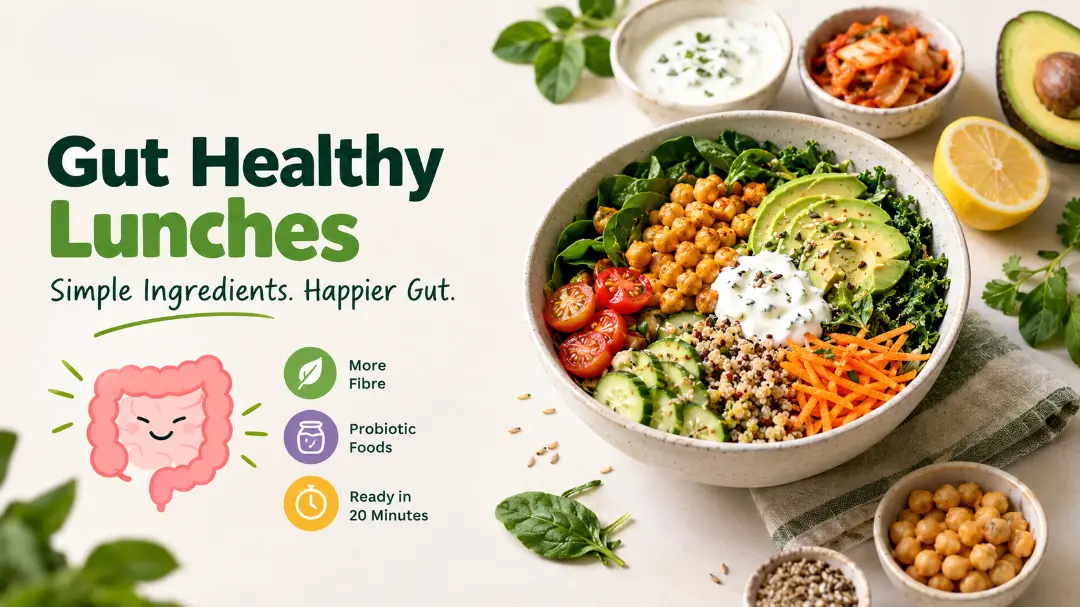
Here’s what we’re aiming for with each one: plenty of fibre, ideally some fermented or probiotic food, and nothing that takes more than 20 minutes.
What makes a lunch “gut healthy” anyway?
It comes down to two things.
Fibre keeps digestion moving. The NHS suggests aiming for around 30g a day, and most people in the UK fall short of that. Beans, oats, whole grains, fruit and vegetables are the usual suspects.
Live bacteria and the food they like. Probiotic foods (yogurt, kimchi, sauerkraut, kefir) bring friendly bacteria in. Prebiotic foods (beans, oats, apples, seeds) feed the bacteria you already have. Doctors at Hartford HealthCare make a point that’s easy to miss: you don’t need a total diet overhaul. Adding a couple of these foods each week, and sticking with it, matters more than going all-in for three days.
One more thing before the list. Pantry basics like olive oil, salt and pepper don’t count toward the five.
The 10 lunches
1. Smashed avocado and chickpea bowl
You need: canned chickpeas, a ripe avocado, cucumber, a lemon, feta.
Mash half the chickpeas into the avocado with lemon juice so it turns creamy, then fold in the rest with chopped cucumber and crumbled feta. No cooking, about five minutes. It’s the lunch to make when you’ve got nothing planned.
2. Loaded baked potato with chicken
You need: a medium potato, rotisserie chicken, Greek yogurt, salsa, avocado.
Bake the potato (or microwave it for 8 minutes if you’re short on time) and keep the skin on, since that’s where much of the fibre sits. Pile on shredded chicken, a spoon of yogurt, salsa and sliced avocado. It feels like comfort food but behaves like a proper meal.
3. Chicken and avocado sandwich
You need: whole-grain bread, avocado, sliced tomato, cooked chicken, baby spinach.
Use mashed avocado instead of mayo. It’s creamier than you’d expect and adds fibre where mayo adds nothing.
4. Kale, chickpea and tuna jar
You need: chopped kale, chickpeas, canned tuna, shredded carrot, lemon-olive oil dressing.
Dress the kale first and let it sit in the jar for a few hours. It softens on its own, so there’s no need to massage it. Make three jars on Sunday and lunch is sorted until Wednesday.
5. Couscous and chickpea salad
You need: whole-wheat couscous, chickpeas, cherry tomatoes, fresh basil, olive oil and lemon.
Couscous cooks in about five minutes with boiling water. Toss everything together and eat it warm or cold. Think of it as a lazy tabbouleh.
6. Shrimp and edamame slaw bowl
You need: bagged cabbage slaw, cooked shrimp, shelled edamame, a lime, chilli sauce.
Light on carbs but still filling, thanks to the edamame. Good for a hot day when you don’t want anything heavy.
7. Teriyaki tofu rice bowl with kimchi
You need: microwave brown rice, baked tofu, frozen broccoli, teriyaki sauce, kimchi.
The kimchi is the gut-friendly bit here. Choose one that’s unpasteurised and low in added sugar, and add it after heating so it stays cool and crunchy.
8. Black bean pasta salad
You need: black bean pasta, chicken strips, sweetcorn, salsa, a lime.
Bean-based pasta carries much more fibre than regular pasta. It holds up in the fridge, so it’s a good meal-prep option.
9. Chickpea, quinoa and sweet potato bowl
You need: quinoa, chickpeas, roasted sweet potato, spinach, tahini.
Roast the sweet potato in a batch and use it all week. Thin the tahini with a bit of water and lemon for a quick sauce.
10. White bean and slaw salad with yogurt dressing
You need: canned white beans, broccoli slaw mix, plain Greek yogurt, fresh herbs, lemon.
Stir the yogurt, herbs and lemon together for an instant dressing. Ready in five minutes, and it’s crunchy rather than soggy.
A few tips so these actually work for you
Go slowly with fibre. If you’re not used to beans and whole grains, ramp up over a couple of weeks. Jumping straight in can make you more bloated, not less.
Drink water. Fibre needs fluid to do its job. The NHS points out that without enough water, extra fibre can actually lead to constipation.
Know your triggers. Onions, wheat and some beans bother people with IBS. If a lunch above doesn’t agree with you, swap that ingredient. Keeping a simple food diary for a week or two helps you spot patterns.
Give probiotics time. If you’re trying yogurt or kimchi daily, the NHS suggests giving it at least four weeks before deciding whether it helps.
FAQs About Gut Healthy Lunches
1.What is a good gut healthy lunch?
One that combines fibre-rich foods like beans, whole grains or vegetables with a fermented food such as yogurt or kimchi, and doesn’t lean on heavy, greasy ingredients.
2.Can I eat these lunches every day?
Yes, though variety is better. Different plants feed different gut bacteria, so rotating through a few of these is a smarter plan than eating the same bowl all week.
3.Do I need probiotic supplements?
Not necessarily. Food sources like yogurt, kefir, kimchi and sauerkraut are a good starting point. If you have a health condition or weakened immunity, talk to your doctor before taking supplements.
4.Why do beans make me bloated?
They’re high in fibre and certain carbohydrates your gut ferments. Start with small portions, rinse canned beans well, and build up gradually.
5.How long until I notice a difference?
Some people feel better within a week or two. For others it takes longer, and consistency matters more than perfection.