



Does Stress Really Cause “Cortisol Face”? Here’s the Truth
It’s everywhere online right now — puffier cheeks, a rounder jawline, a face that looks swollen even though your weight hasn’t changed. It’s being called cortisol face, and it’s one of those trends where the truth is more nuanced than the viral version.
Is Cortisol Face Real?
Partly. The medical reality behind it is called “moon face,” a well-documented sign of significantly elevated cortisol, most commonly seen in Cushing’s syndrome or from long-term steroid medication use. In these cases, cortisol genuinely redistributes fat to the face, neck, and midsection over several months.
What’s mostly a myth is the social media version — the idea that everyday, garden-variety stress raises cortisol high enough to reshape your face. According to endocrinologists, normal daily stress doesn’t push cortisol anywhere near the levels needed to cause that kind of fat redistribution. So when people ask, “is cortisol face real,” the honest answer is: the mechanism is real, but most cases blamed on it aren’t actually cortisol at all.
What Causes Cortisol Face (and What Doesn’t)
Genuinely cortisol-related: Cushing’s syndrome, long-term corticosteroid use, and other conditions that keep cortisol chronically and significantly elevated.
Usually mistaken for it: Morning puffiness is far more commonly caused by poor sleep, high sodium intake, or alcohol the night before — not cortisol. These cause temporary fluid retention that looks similar but resolves much faster.
Signs of Cortisol Face vs. Everyday Puffiness
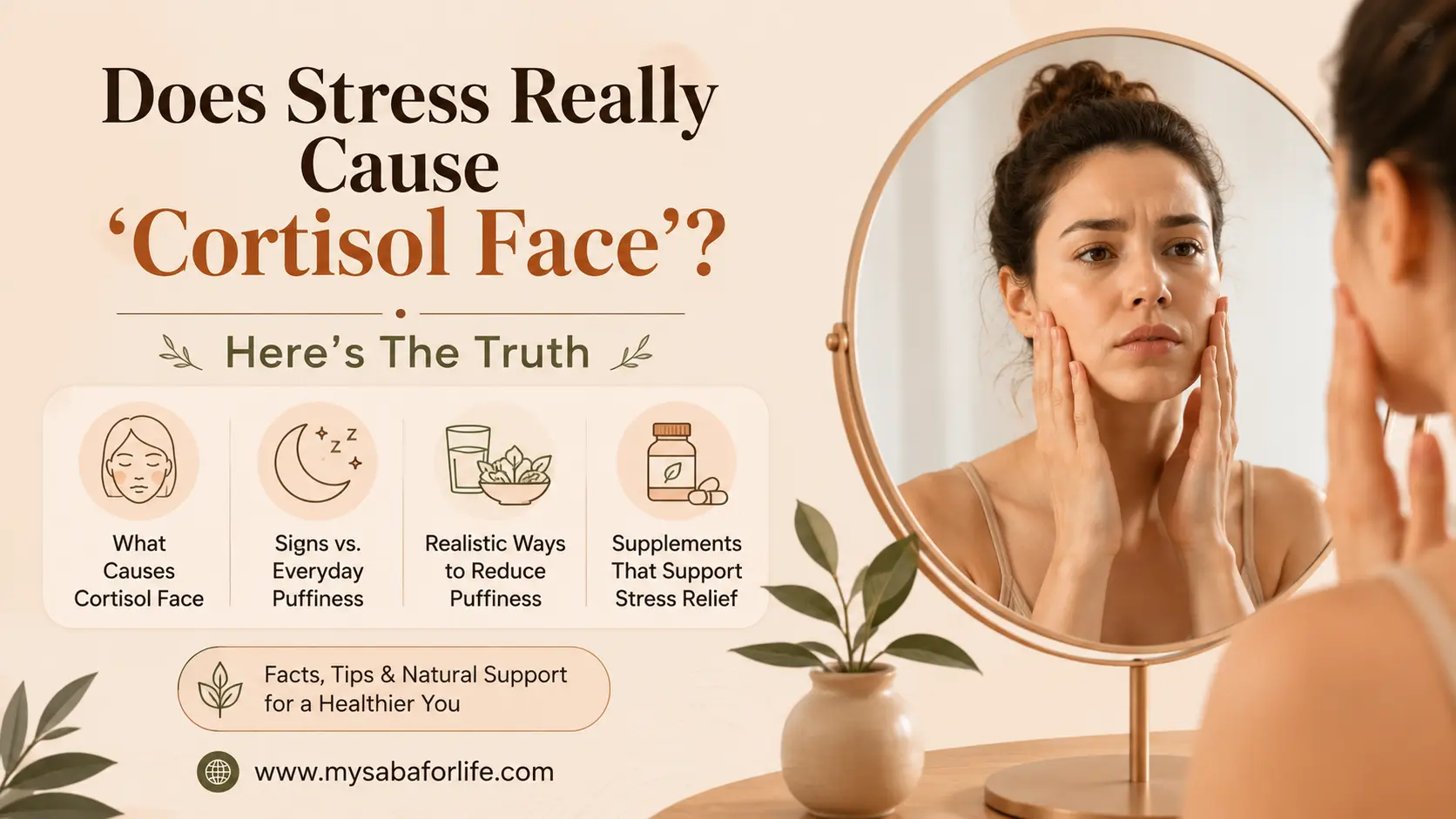
True cortisol-driven facial swelling tends to be persistent and gradual, building over weeks or months, and is often paired with other symptoms like a rounded midsection, thin skin, easy bruising, or muscle weakness. Ordinary puffiness — the kind most people are actually seeing — is usually inconsistent, worse some mornings than others, and improves with better sleep or less salt the day before.
If swelling is constant and comes with those additional symptoms, it’s worth mentioning to a doctor rather than assuming it’s just stress.
How to Get Rid of Cortisol Face (the Realistic Version)
Since most “cortisol face” people notice is actually everyday fluid retention, the fastest, most realistic fixes target that directly:
- Improve sleep — aim for 7-8 hours consistently; poor sleep is one of the most common real drivers of morning facial puffiness
- Cut back on sodium and alcohol — both are well-established causes of temporary facial swelling
- Stay hydrated — sounds counterintuitive, but dehydration can worsen fluid retention
- Manage stress with consistent habits — daily movement, breathing exercises, or short walks help regulate cortisol over time, even if it wasn’t the main cause of the puffiness
- Avoid relying on face exercises or ice rollers as a fix — these can temporarily drain fluid but don’t address the underlying cause
There’s no genuinely “fastest way to get rid of moon face” if it’s truly cortisol-driven — that requires treating the underlying cause with a doctor. But for everyday puffiness, sleep and sodium changes usually show a difference within days.
Do Supplements to Reduce Cortisol Face Actually Work?
Adaptogens like ashwagandha and rhodiola are traditionally used to support the body’s stress response and are commonly marketed as supplements to reduce cortisol face. They won’t fix true moon face from Cushing’s syndrome, but for everyday stress-related cortisol elevation, they may support a more balanced response over time when combined with better sleep and lower sodium intake. Saba Prime™ is formulated with adaptogens designed for exactly this kind of daily stress support.
When to See a Doctor
See a doctor if facial swelling is persistent, worsening, or accompanied by high blood pressure, sudden weight gain, easy bruising, or muscle weakness — these can indicate Cushing’s syndrome or another condition that needs medical evaluation, not just lifestyle changes.
FAQs- Cortisol Face
1.Is cortisol face a real medical diagnosis?
No. “Cortisol face” isn’t an official medical term. The real diagnosis is Cushing’s syndrome, which can cause a similar appearance called moon face.
2.What are the signs of cortisol face?
Persistent facial puffiness, rounding of the cheeks and jawline, and sometimes facial redness, usually alongside other symptoms like abdominal weight gain or thin skin in genuine cases.
3.How do I get rid of cortisol face fast?
For everyday puffiness, better sleep and less sodium and alcohol usually help within days. True cortisol-driven swelling requires treating the underlying medical cause.
4.What does high cortisol actually look like in the face?
In genuine cases, it looks like gradual, persistent rounding of the face and cheeks, distinct from the temporary puffiness most people experience.
5.Are there supplements to reduce cortisol face?
Adaptogens are commonly used to support the body’s stress response, but they address everyday cortisol fluctuations, not the significant elevation seen in Cushing’s syndrome.
This article is for informational purposes only and is not a substitute for professional medical advice.