

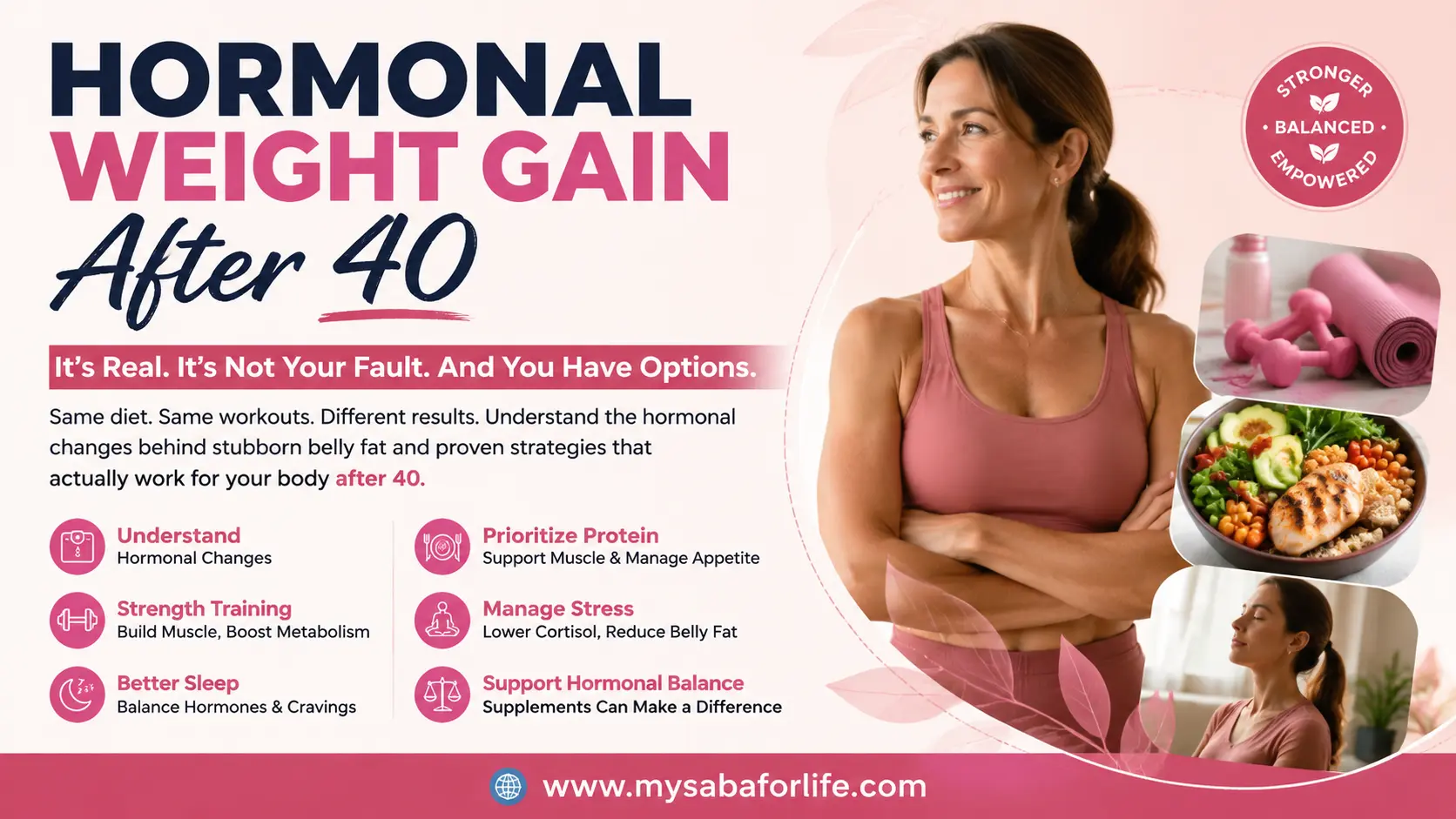
Same diet. Same workouts. Different results. If that sounds familiar, you’re not imagining it — hormonal weight gain after 40 is real, and it has very little to do with willpower or effort.
Why Your Body Starts Storing Fat Differently
In your 20s and 30s, estrogen plays a quiet but powerful role in how your body distributes fat, regulates metabolism, and manages appetite. As estrogen levels begin to decline in your late 30s and 40s — often years before menopause officially starts — that regulation starts to shift.
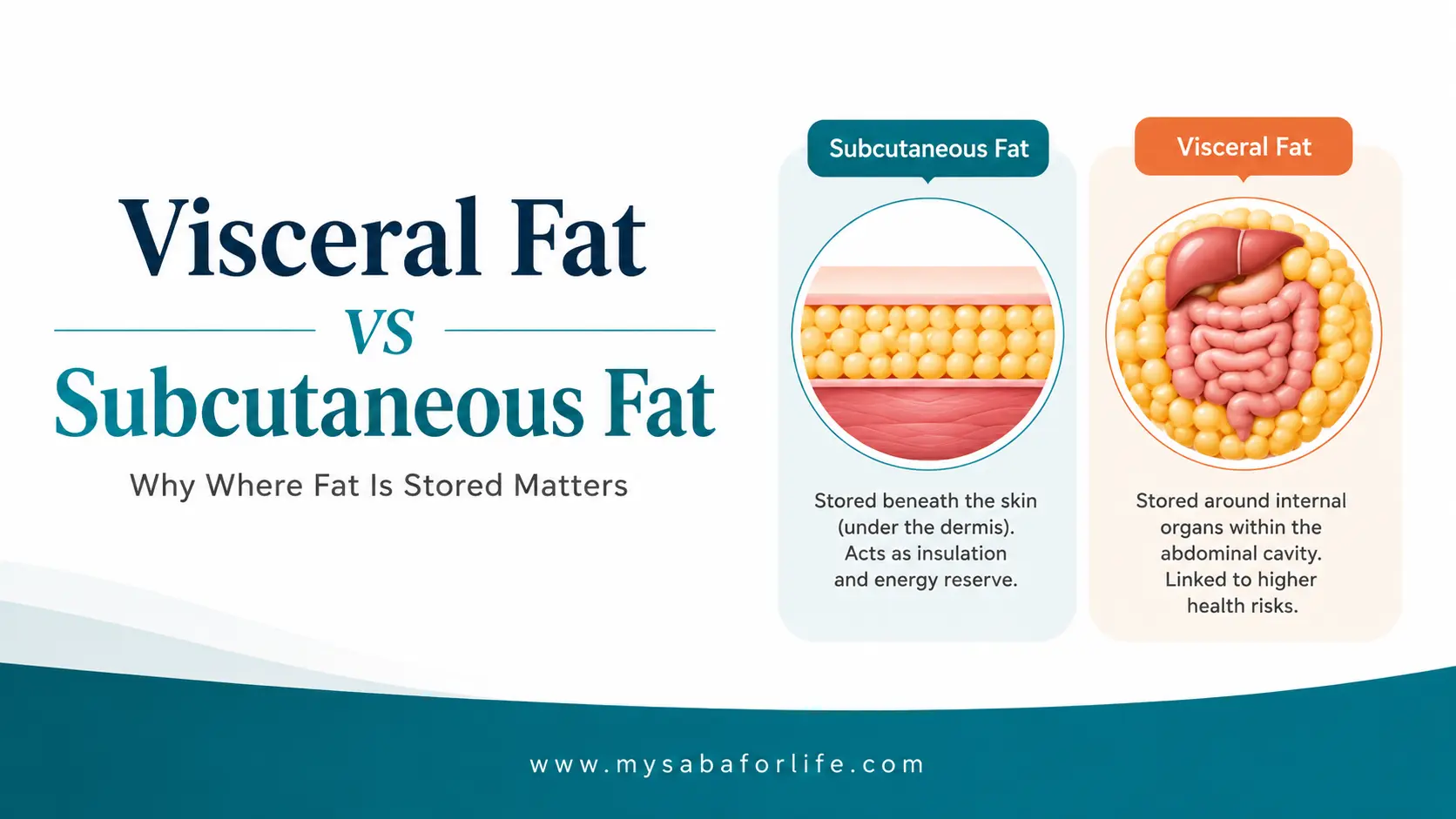
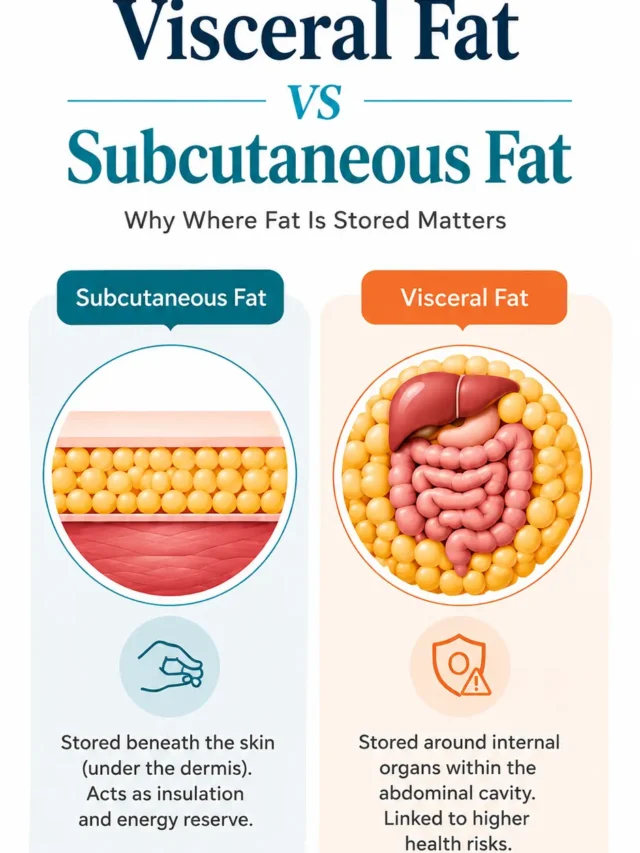
Fat storage tends to move from the hips and thighs toward the abdomen. Metabolism slows because muscle mass naturally declines with age, and muscle is what burns the most calories at rest. The combination means your body needs fewer calories than it used to, while simultaneously making it easier to store what you do eat around your midsection.
It’s Not Just Estrogen
A few other hormonal shifts compound the issue:
Cortisol tends to rise with age and chronic stress, and elevated cortisol is directly linked to increased abdominal fat storage.
Insulin sensitivity often decreases with age, meaning your body needs more insulin to manage the same amount of food, which favors fat storage over fat burning.
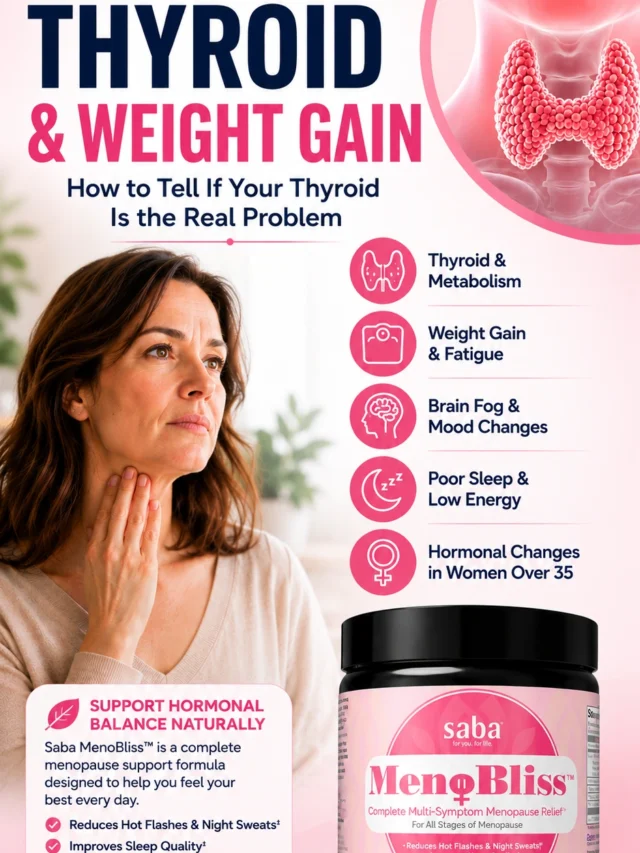
Thyroid function can also become less efficient in this age range, further slowing metabolism for some women.
Together, these shifts explain why hormonal weight gain after 40 so often shows up as stubborn belly fat rather than gradual, even weight gain across the body.
Why Diet and Exercise Alone Sometimes Aren’t Enough
This is the part that frustrates most women: the exact diet and workout routine that worked in your 30s may no longer produce the same results. That’s not a failure of effort — it’s a sign your hormonal baseline has changed, and your approach needs to shift with it.
Aggressive calorie cutting can actually backfire here, since it raises cortisol and can further slow metabolism. A more moderate, sustainable approach tends to work better than extreme restriction during this stage of life.
What Actually Helps
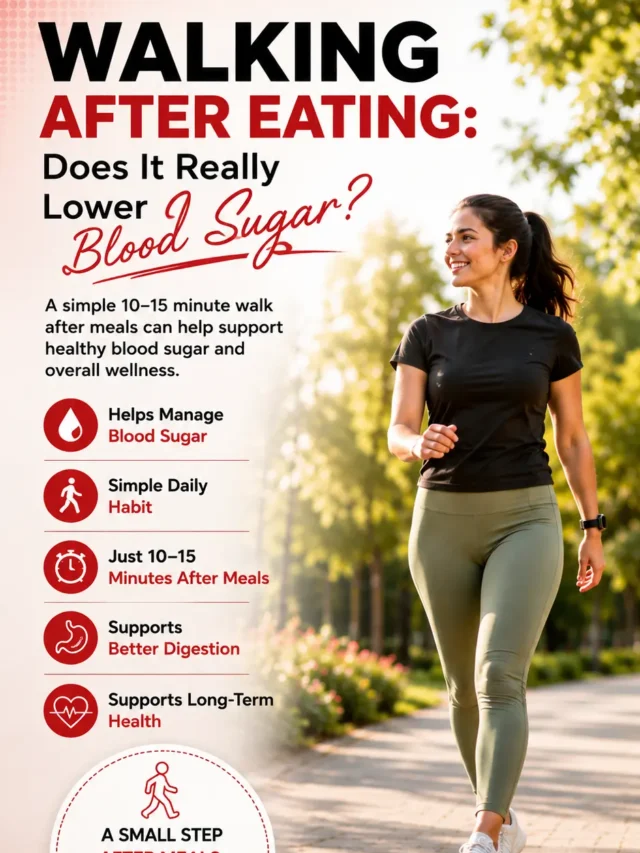
Strength training becomes more important than ever, since it directly counters the muscle loss driving your slower metabolism.
Prioritizing protein at each meal supports muscle maintenance and helps manage appetite more effectively than cutting calories alone.
Managing stress matters more than most people realize, given cortisol’s direct role in abdominal fat storage.
Improving sleep quality supports both cortisol regulation and insulin sensitivity — two of the biggest levers in this equation.
Supporting hormonal balance directly can also make a meaningful difference. Formulas like Saba MenoBliss are specifically designed to support hormonal balance during this transition, which can make the other lifestyle changes noticeably more effective.
When to Talk to a Doctor
If weight gain is rapid, accompanied by other symptoms like extreme fatigue, hair loss, or irregular periods, it’s worth getting bloodwork done to rule out thyroid issues or other underlying causes rather than assuming it’s hormonal weight gain alone.
FAQs- Hormonal Weight Gain After 40
1.At what age does hormonal weight gain typically start?
For many women, subtle hormonal shifts begin in the late 30s, with more noticeable effects on weight and fat distribution showing up in the 40s.
2.Why does weight gain after 40 concentrate around the belly?
Declining estrogen and rising cortisol both favor abdominal fat storage over the hip and thigh storage more common earlier in life.
3.Can hormonal weight gain be reversed?
Yes, though it often requires adjusting your approach — more strength training, better sleep, and stress management tend to work better than diet alone.
4.Does menopause cause more weight gain than perimenopause?
Weight gain often begins during perimenopause, as hormone levels start fluctuating well before menopause is officially reached.
5.Is it normal to gain weight even while eating less after 40?
Yes, this is common due to a slower metabolism from hormonal shifts and muscle loss, which is why calorie-cutting alone often isn’t enough.