




Thyroid and Weight Gain- Thyroid Disorders and Their Impact on Weight Management
You’ve cut calories, added workouts, and still the weight won’t move — or worse, it keeps creeping up. Before you blame willpower, it’s worth asking a different question: could thyroid and weight gain actually be connected in your case? For many women, especially after 35, an underactive thyroid is the missing piece nobody checked for.
How the Thyroid Controls Your Metabolism
Your thyroid is a small gland in your neck that produces hormones controlling how fast or slow your body burns energy — your basal metabolic rate (BMR). When thyroid hormone levels drop (a condition called hypothyroidism), your BMR slows down, meaning your body burns fewer calories at rest. This is the core reason thyroid and weight gain so often show up together, even when eating habits haven’t changed much.
Signs Your Thyroid Might Be the Real Problem
Not all weight gain is thyroid-related, but these signs suggest it’s worth investigating:
1. Weight Gain Despite No Diet Changes
If you’re gaining weight while eating the same way you always have, sluggish thyroid function could be slowing your metabolism behind the scenes.
2. Constant Fatigue
Low thyroid hormone levels leave cells starved for energy, leading to fatigue that doesn’t improve with sleep or rest.
3. Feeling Cold All the Time
Thyroid hormones help regulate body temperature. Hypothyroidism often causes cold intolerance — feeling chilly when everyone else is comfortable.
4. Hair Thinning or Dry Skin
Slower cell turnover from low thyroid function commonly shows up as thinning hair, brittle nails, or unusually dry skin.
5. Brain Fog or Difficulty Concentrating
Many women describe a mental “fog” alongside thyroid-related weight gain — trouble focusing, forgetfulness, or feeling mentally slow.
6. Irregular Periods or Worsening PMS
Thyroid hormones interact closely with reproductive hormones, so thyroid imbalance can show up as irregular cycles or intensified PMS symptoms.
Why Women Over 35 Are More Affected
Thyroid function naturally becomes more prone to imbalance during perimenopause and menopause, when estrogen fluctuations directly influence thyroid hormone production and sensitivity. This overlap is a big reason why thyroid and weight gain complaints spike in women in their late 30s, 40s, and 50s — the two systems are hormonally intertwined, not separate issues.
What You Can Do
1. Get Your Thyroid Levels Checked -A simple blood test (TSH, T3, T4) can confirm or rule out thyroid involvement. This is the only reliable way to know for certain — don’t self-diagnose based on symptoms alone.
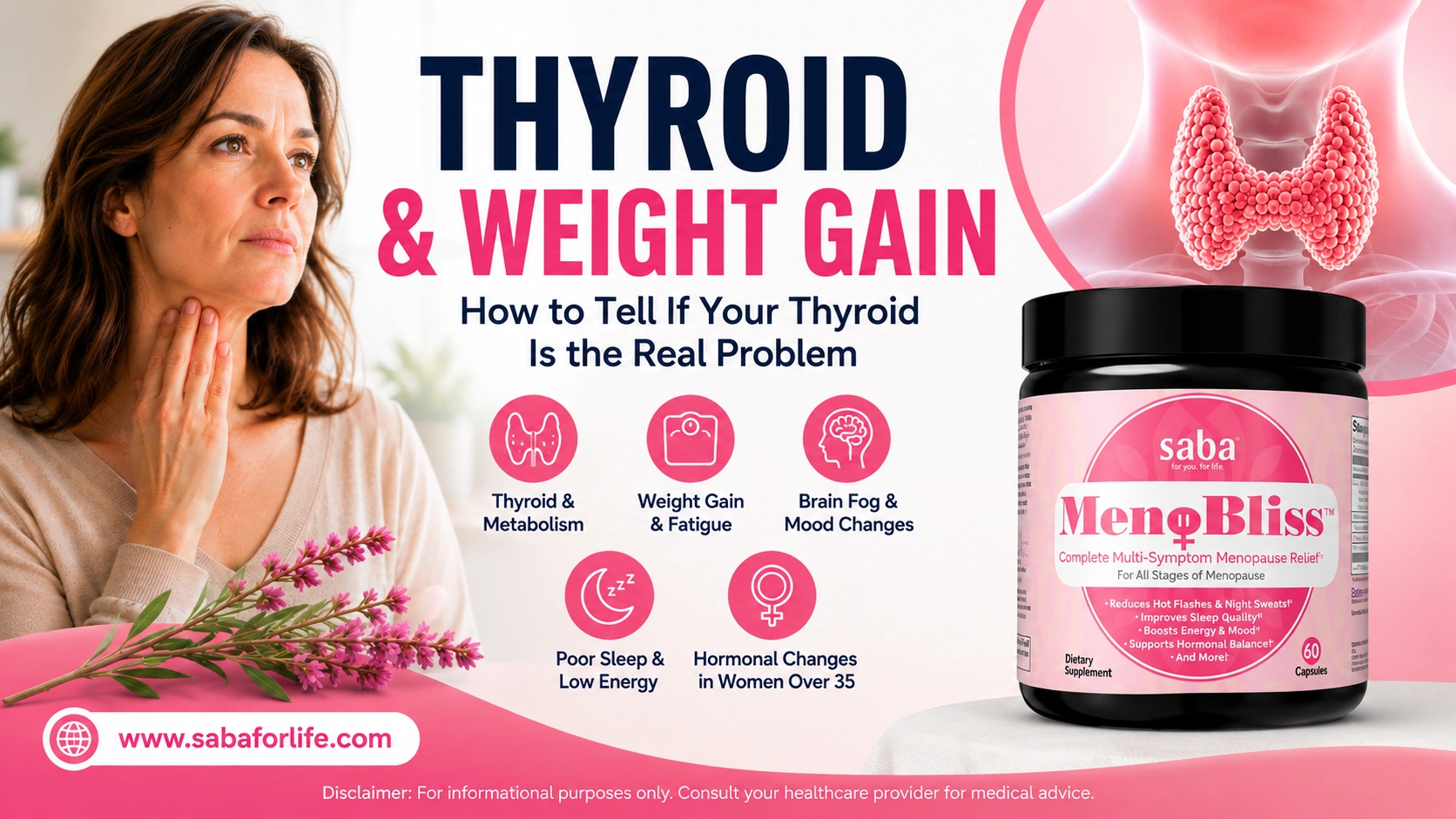
2. Support Hormonal Balance Naturally -Since thyroid function and reproductive hormones are so closely linked, supporting overall hormonal balance can help both systems work more efficiently. Formulas like Saba MenoBliss are specifically designed to support thyroid function alongside broader hormonal balance during perimenopause and menopause — helping address the bigger picture, not just one symptom.
3. Prioritize Protein and Iodine-Rich Foods -Thyroid hormone production depends on nutrients like iodine, selenium, and zinc. Foods like eggs, fish, and dairy support this naturally.
4. Manage Stress -Chronic stress affects the hypothalamus-pituitary-thyroid axis, which can further suppress thyroid output over time.
5. Move Consistently, Not Aggressively -Overtraining can add stress to an already taxed system. Consistent, moderate movement supports metabolism better than sporadic intense workouts.
Thyroid and Weight Gain- Understanding the Connection
If diet and exercise haven’t moved the needle no matter how consistent you’ve been, it may be time to look beyond calories. The link between thyroid and weight gain is real, especially for women navigating hormonal shifts after 35. Getting tested and supporting your body’s natural hormonal balance can make the difference between spinning your wheels and finally seeing progress.
FAQs- Thyroid and Weight Gain
1. How much weight gain is normal with hypothyroidism?
Most people gain 5-10 pounds, largely from reduced metabolic rate and water retention, not fat alone.
2. Can thyroid weight gain be reversed?
Yes, with proper treatment and hormonal support, most thyroid-related weight changes can be managed and often reversed over time.
3. What thyroid test should I ask my doctor for?
Ask for a full panel — TSH, free T3, and free T4 — since TSH alone can miss some imbalances.
4. Is thyroid-related weight gain more common in women?
Yes, women are significantly more likely to develop thyroid disorders than men, especially during hormonal transitions like perimenopause.
5. Can I lose weight with an underactive thyroid?
Yes, but it typically requires addressing the thyroid imbalance first — diet and exercise alone are often less effective until hormone levels are supported.
This article is for informational purposes only and does not replace professional medical advice or diagnosis.