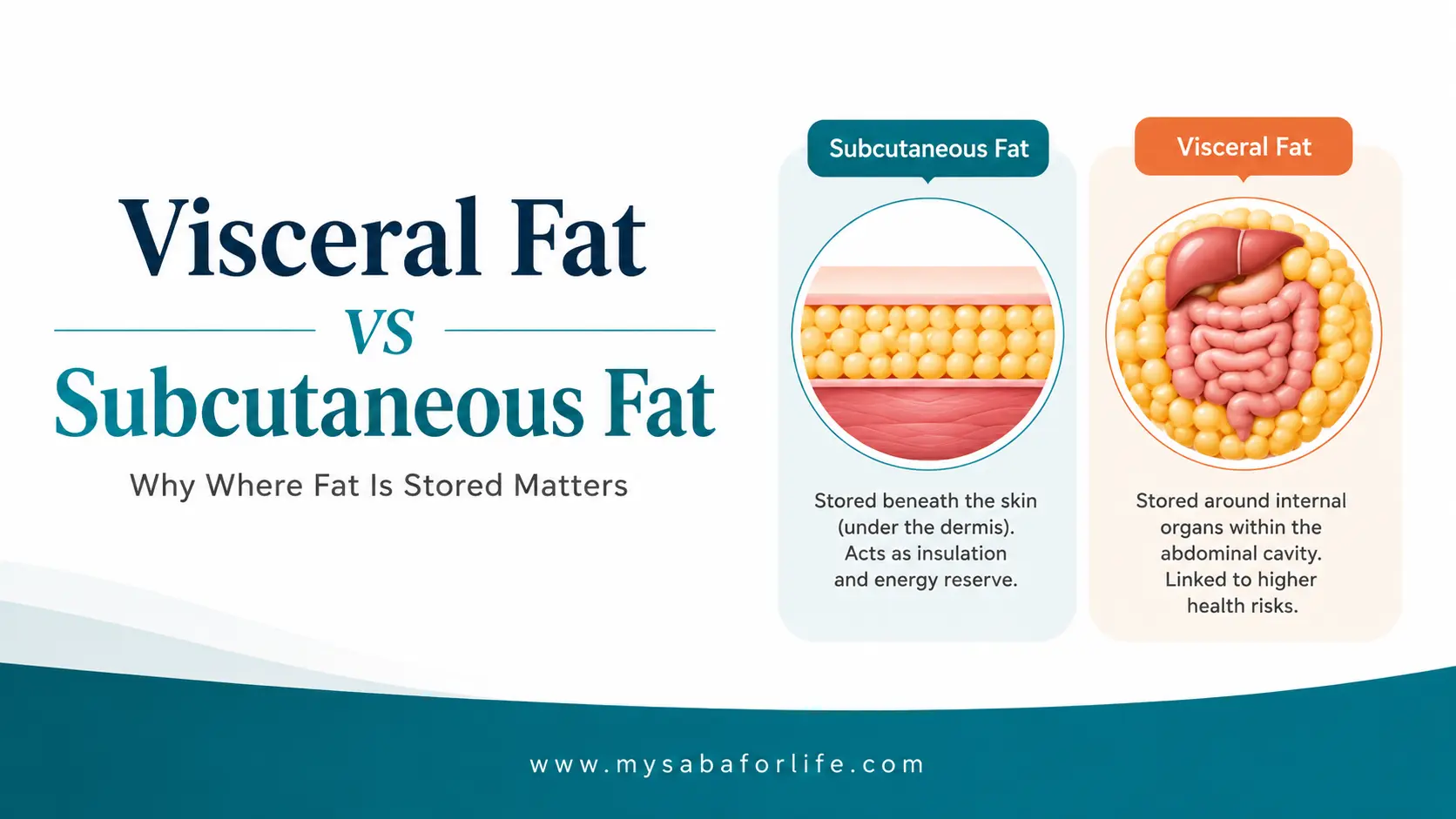
Visceral Fat vs Subcutaneous Fat: Which One Should You Worry About?
Two people can weigh the exact same amount and be in completely different health situations. The reason often comes down to visceral fat vs subcutaneous fat — where your body actually stores its fat matters just as much as how much you carry.
What’s the Difference?
Subcutaneous fat sits just beneath the skin. It’s the fat you can pinch on your belly, arms, or thighs. It’s mostly a cosmetic concern and, in normal amounts, isn’t considered dangerous.
Visceral fat is different. It’s stored deep in the abdominal cavity, wrapped around internal organs like the liver, stomach, and intestines. You can’t pinch it, and you often can’t see it — even people who look lean can carry excess visceral fat.
Why Visceral Fat Is the Bigger Concern
Visceral fat isn’t passive storage. It actively releases inflammatory compounds and fatty acids directly into the bloodstream, feeding into the liver through the portal vein. Over time, this raises the risk of insulin resistance, fatty liver disease, type 2 diabetes, and cardiovascular disease — risks that subcutaneous fat doesn’t carry to the same degree.
This is exactly why visceral fat vs subcutaneous fat isn’t just a technical distinction — it’s the difference between a mostly cosmetic issue and a genuine metabolic health risk.
How to Tell Which One You Have
There’s a simple starting test: if you can pinch the fat on your stomach, that layer is subcutaneous. A firmer, more rounded belly that doesn’t pinch easily often signals higher visceral fat underneath. Waist circumference is a more reliable at-home marker — a waist over 35 inches for women or 40 inches for men is generally associated with higher visceral fat levels. For an exact measurement, a CT scan or DEXA scan is the clinical gold standard.
Which Is Worse- Visceral or Subcutaneous Fat?
Visceral fat is considered more dangerous, even in smaller amounts, because of its direct link to organ function and inflammation. Subcutaneous fat, while it affects appearance, doesn’t carry the same disease risk unless present in very large amounts.
Which Burns First?
Generally, visceral fat responds faster to lifestyle changes like diet and exercise than subcutaneous fat does. This is actually encouraging news — the more dangerous type of fat is often the first to improve once you make consistent changes, even before you see a difference on the scale or in the mirror.
What Actually Reduces Visceral Fat
There’s no way to spot-reduce visceral fat directly, but certain habits are shown to reduce it more effectively than others:
- Reducing refined sugar and processed carbs — these are strongly linked to visceral fat accumulation
- Regular aerobic exercise — even moderate activity like brisk walking has a measurable effect on visceral fat specifically
- Strength training — helps preserve muscle while supporting fat loss overall
- Better sleep — poor sleep is independently linked to higher visceral fat over time
- Managing stress — elevated cortisol is associated with increased visceral fat storage
Does Losing Weight Reduce Both Types?
Yes, but not always at the same rate. Weight loss tends to reduce visceral fat proportionally faster in many people, which is why some notice health markers (blood sugar, energy, blood pressure) improving before major visible changes appear.
Supporting a healthy metabolism alongside these habits can help — this is part of why formulas like Saba GLP-1™ are designed to support balanced blood sugar and metabolic function, working alongside diet and activity rather than replacing them.
FAQs-Visceral Fat vs Subcutaneous Fat
1.Which is easier to lose, visceral or subcutaneous fat?
Visceral fat generally responds faster to diet and exercise changes, while subcutaneous fat tends to take longer to reduce.
2.What kills visceral fat quickly?
No method removes it “quickly,” but a combination of reduced refined carbs, regular exercise, and better sleep produces the fastest measurable reductions.
3.Is visceral fat vs subcutaneous fat different for women?
Yes. Hormonal shifts, especially during menopause, can shift fat storage from subcutaneous to visceral, which is one reason belly fat composition often changes with age.
4.Can you have high visceral fat while being a normal weight?
Yes, this is sometimes called being “skinny fat” — a normal BMI with higher-than-ideal visceral fat, often linked to inactivity and diet quality.
5.Does visceral fat go away with weight loss alone?
It typically decreases with weight loss, but exercise and sleep quality significantly speed up the process beyond diet changes alone.