
The first cold evening of the year has a way of changing what you want for dinner. Salads lose their appeal and a pot of something warm starts sounding perfect. The trouble is that plenty of soups lean on cream, salt, and refined noodles. These healthy fall soup recipes go the other direction: they’re built around vegetables, beans, and lean protein so you stay full, get real fiber, and still have leftovers for the week.
The Four-Part Formula for a Healthy Soup
You don’t need a recipe for every pot. Most good soups follow the same pattern.
- Aromatic base. Onion, garlic, celery, and carrot softened in a spoonful of olive oil.
- Seasonal vegetables. Squash, sweet potato, cabbage, mushrooms, kale, or whatever looks good at the market.
- A protein or legume. Beans, lentils, chickpeas, chicken, or turkey. This is what makes a soup a meal.
- A bright finish. Lemon juice, vinegar, fresh herbs, or a little Parmesan wakes up everything that simmered.
Aim for broth-based over cream-based most nights. Brothy soups can help you feel full on fewer calories, which is useful if you’re watching your weight.
Six Healthy Fall Soup Ideas
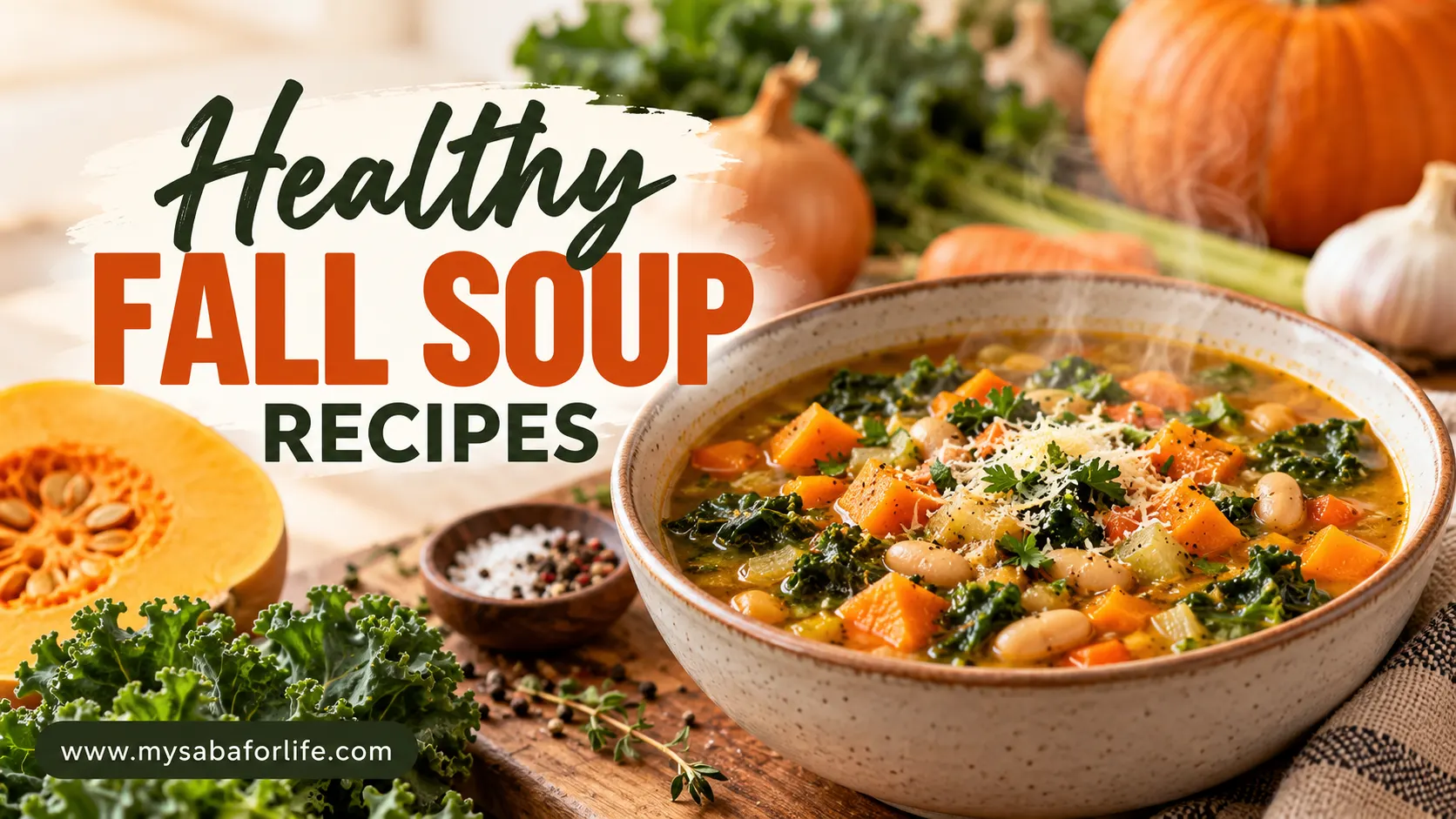
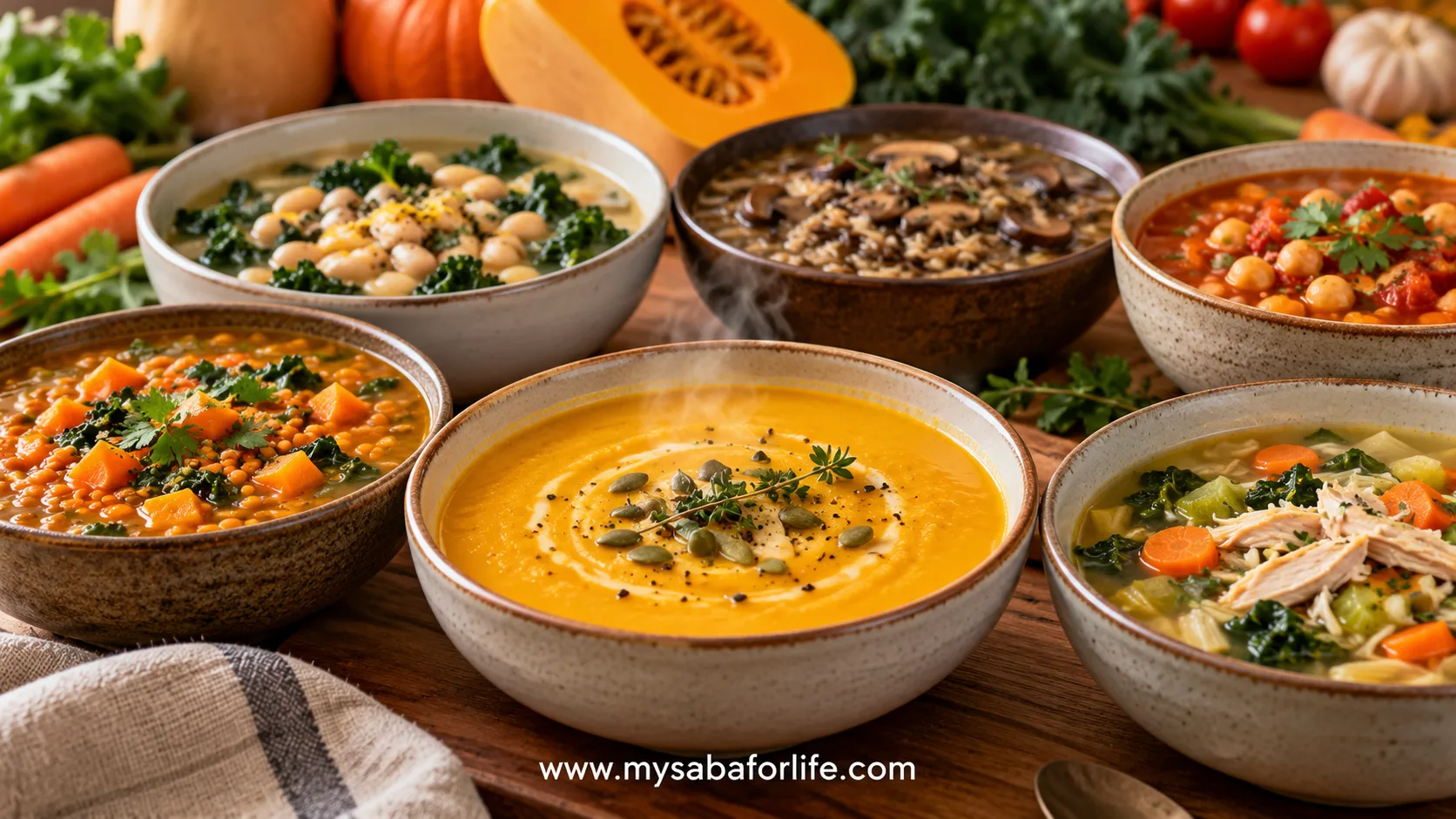
White bean and kale. Sauté onion and garlic, add low-sodium broth, a can of white beans, and chopped kale. Mash some of the beans against the pot to thicken it without cream. Finish with lemon.
Red lentil and sweet potato. Lentils pack roughly 15 grams of fiber and 18 grams of protein per cooked cup. Cook red lentils with cubed sweet potato, turmeric, cumin, and ginger until it turns thick and golden.
Roasted butternut squash. Roast the squash with an onion first, since caramelizing builds flavor you can’t get from boiling. Blend with broth. A handful of white beans or a splash of coconut milk makes it silky without heavy cream.
Chicken and vegetable. Poach shredded chicken in broth with carrots, celery, and greens. Add whole-wheat noodles or brown rice at the end, and a squeeze of lemon. It’s fast enough for a weeknight.
Mushroom and wild rice. Browned mushrooms give a deep, almost meaty flavor. Wild rice adds chew and fiber, and a little thyme does the rest.
Chickpea and tomato. Simmer chickpeas, canned tomatoes, carrots, and a pinch of cinnamon and paprika for a Moroccan-style pot that’s hearty and plant-based.
Make Them Ahead
Soup is one of the few foods that improves on day two. Cool it quickly, refrigerate within two hours, and plan to eat it within three to four days. For longer storage, freeze portions for two to three months. A few notes that save disappointment:
- Add cream, milk, or cheese when you reheat, not before freezing, since dairy can separate.
- Cook pasta and rice separately if you plan to freeze, or they turn mushy.
- Reheat until steaming hot, around 165°F. The USDA Food Safety and Inspection Service has full leftover guidelines.
Watch the Sodium
Canned broths and soups can carry several hundred milligrams of sodium per cup, which adds up fast against the recommended limit of 2,300 milligrams a day. Choose low-sodium broth, rinse canned beans, and season with herbs, acid, and spices before reaching for the salt shaker. The American Heart Association has more on cutting back.
Soup, Fiber, and Your Gut
Beans, lentils, and vegetables make soup an easy way to hit your fiber goals, and fiber is what your gut bacteria feed on. Pair your bowl with a piece of fruit for dessert. We rounded up the best fall fruits for gut health if you want ideas. Protein also matters more as we age, so lentil and chicken soups are a handy way to get it. Our guide on how to prevent muscle loss after 60 explains why.
On weeks when vegetables slip, some people add a greens and probiotic blend like Saba N-Fuse™ to their routine. Most probiotics are sensitive to heat, so take it separately instead of stirring it into a hot pot.
FAQs- Healthy Fall Soup Recipes
1.What is the healthiest soup to eat in the fall?
Broth-based soups loaded with vegetables, beans, or lentils are usually the best choice, since they’re high in fiber and protein and lower in saturated fat than cream-based versions.
2.How do I make soup more filling?
Add a protein source like beans, lentils, chicken, or tofu, and include a whole grain such as barley or brown rice.
3.Is soup good for weight loss?
It can be. Broth-based, vegetable-rich soups tend to be filling for their calories, which can support weight loss as part of a balanced diet.
4.How long does homemade soup last?
About three to four days in the fridge and two to three months in the freezer.
5.Can I make creamy soup without cream?
Yes. Blend in white beans, potatoes, cauliflower, or roasted squash for body, or use a splash of coconut milk or Greek yogurt at the end.
Healthy Fall Soup Recipes Worth Making on Repeat
Once you know the formula, healthy fall soup recipes stop feeling like projects. Pick a base, add whatever vegetables are in season, bring in a protein, and finish with something bright. Make a double batch this weekend and your future self will have dinner sorted.