


Vitamins vs Supplements- What Your Daily Routine May Need
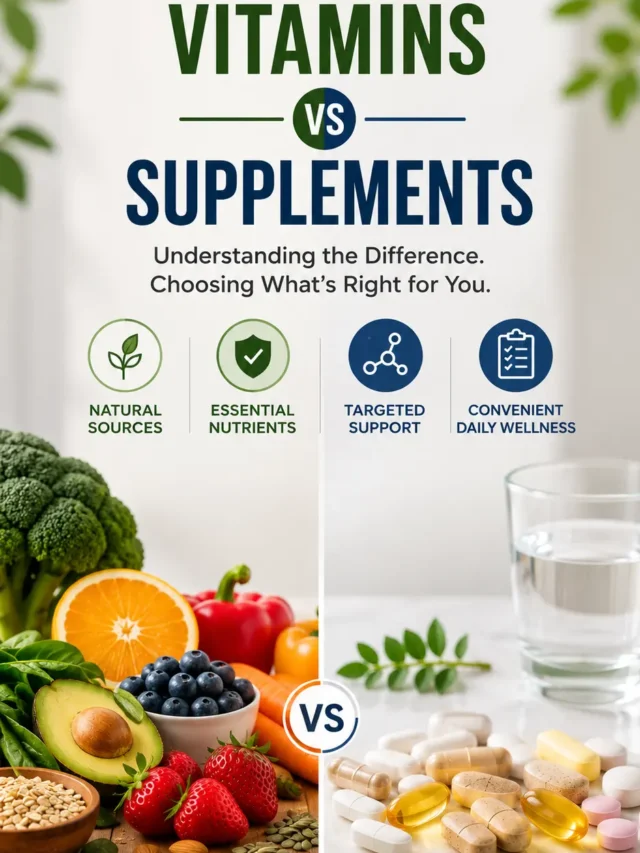
Most people use “vitamin” and “supplement” as if they’re the same thing. They’re not. One is a specific type of nutrient — the other is a much broader category that includes vitamins, minerals, herbs, and more. Here’s the simple breakdown.
What Is a Vitamin?
Vitamins are organic compounds found naturally in food — fruits, vegetables, dairy, and lean meats. Your body needs them in small amounts for essential functions like immunity, energy, and bone health, and (with rare exceptions) can’t produce them on its own.
Vitamins fall into two groups:
- Water-soluble (C, B-complex) — not stored long, need regular intake
- Fat-soluble (A, D, E, K) — stored in the body’s fat and liver
There are 13 essential vitamins in total, each with its own job in the body.
What Is a Supplement?
A supplement is any product taken to add nutritional value to your diet. Per the FDA, that includes vitamins, minerals, amino acids, herbs, enzymes, and probiotics — sold as pills, gummies, powders, or liquids.
So every vitamin is a supplement, but not every supplement is a vitamin. A probiotic or a magnesium capsule, for example, is a supplement — not a vitamin.
Supplements are also regulated more loosely than medication. The FDA treats them as a food category, so they aren’t required to prove effectiveness before hitting shelves — which is why product quality can vary widely.
Key Differences at a Glance
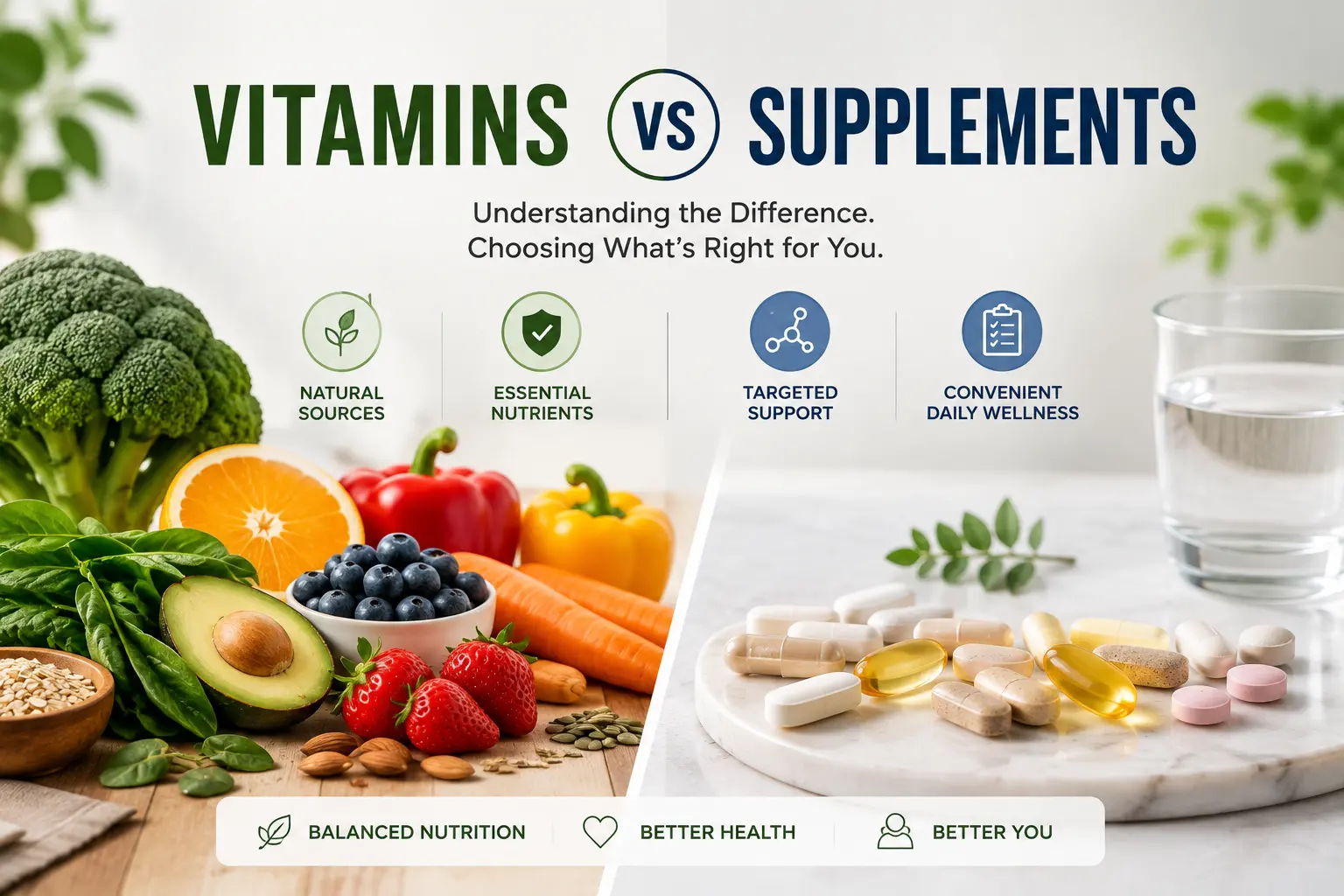
| Vitamins | Supplements | |
|---|---|---|
| Source | Occur naturally in food | Manufactured products |
| Scope | One specific nutrient group (13 total) | Broad category: vitamins, minerals, herbs, etc. |
| Regulation | Not regulated in whole food | Regulated as a food category, not tested for effectiveness pre-sale |
Do You Need Supplements?
Food should always come first — nutrients absorb better from whole meals. But supplements fill real gaps: folate for pregnant women, vitamin D for low sun exposure, B12 for vegans, or targeted support during recovery. Use them with purpose, not as a blanket fix.
Choosing a Quality Product
- Look for third-party testing seals (USP, NSF, ConsumerLab)
- Check for unnecessary fillers or additives
- Match dosage to actual need — more isn’t always better
- Ask a doctor before combining supplements, since some pairs (like calcium and iron) can block absorption
FAQs-Vitamins vs Supplements
1.Is a supplement the same as a vitamin?
No. A vitamin is one specific type of nutrient; a supplement is the broader category it belongs to.
2.Which is better — vitamins or supplements?
Neither — they serve different purposes based on your individual needs.
3.What are the main types of supplements?
Vitamins, minerals, herbal/botanical extracts, amino acids, and probiotics.
4.What supplements shouldn’t be taken together?
Calcium can block iron absorption, and vitamin K can interfere with blood thinners — check with a doctor before stacking.
5. What is the difference between vitamins and supplements?
Vitamins are essential nutrients that the body needs to support normal functions, while dietary supplements are products that can contain vitamins, minerals, herbs, amino acids, or other nutritional ingredients. Vitamins can be found in food and may also be included in dietary supplements.
6. Are vitamins and supplements the same thing?
No. Vitamins are a specific type of nutrient, while dietary supplements are a broader category of products that may contain vitamins, minerals, herbs, and other ingredients.
7. What are dietary supplements used for?
Dietary supplements are intended to supplement the diet by providing nutrients or other dietary ingredients. They can be part of an overall wellness routine alongside a balanced diet and healthy lifestyle.
8. Is it better to get vitamins from food or supplements?
A balanced diet is an important source of essential nutrients. Supplements may be useful in certain situations, but individual nutritional needs vary. Consider your diet, lifestyle, and personal needs when deciding whether a supplement is appropriate.
9. Can you take vitamins and supplements together?
Some vitamins and dietary supplements can be taken together, but combining products may increase your intake of certain nutrients or ingredients. Always check product labels and consider speaking with a qualified healthcare professional about your individual needs.
10. What are the most common types of dietary supplements?
Common dietary supplements include vitamins, minerals, herbal supplements, amino acids, probiotics, and other nutritional products. Different supplements contain different ingredients and are intended for different nutritional purposes.
11. How do I choose the right vitamins or supplements?
Start by considering your diet, nutritional needs, lifestyle, and the ingredients in the product. Read the Supplement Facts label carefully and choose products from reputable brands that provide clear product information.
Vitamins vs Supplements: Making an Informed Choice
Vitamins are a specific nutrient your body needs in small doses. supplements are the wider category they sit under. Neither replaces real food, but used with intention, both support a healthier daily routine.
This article is for informational purposes only and isn’t a substitute for professional medical advice.