
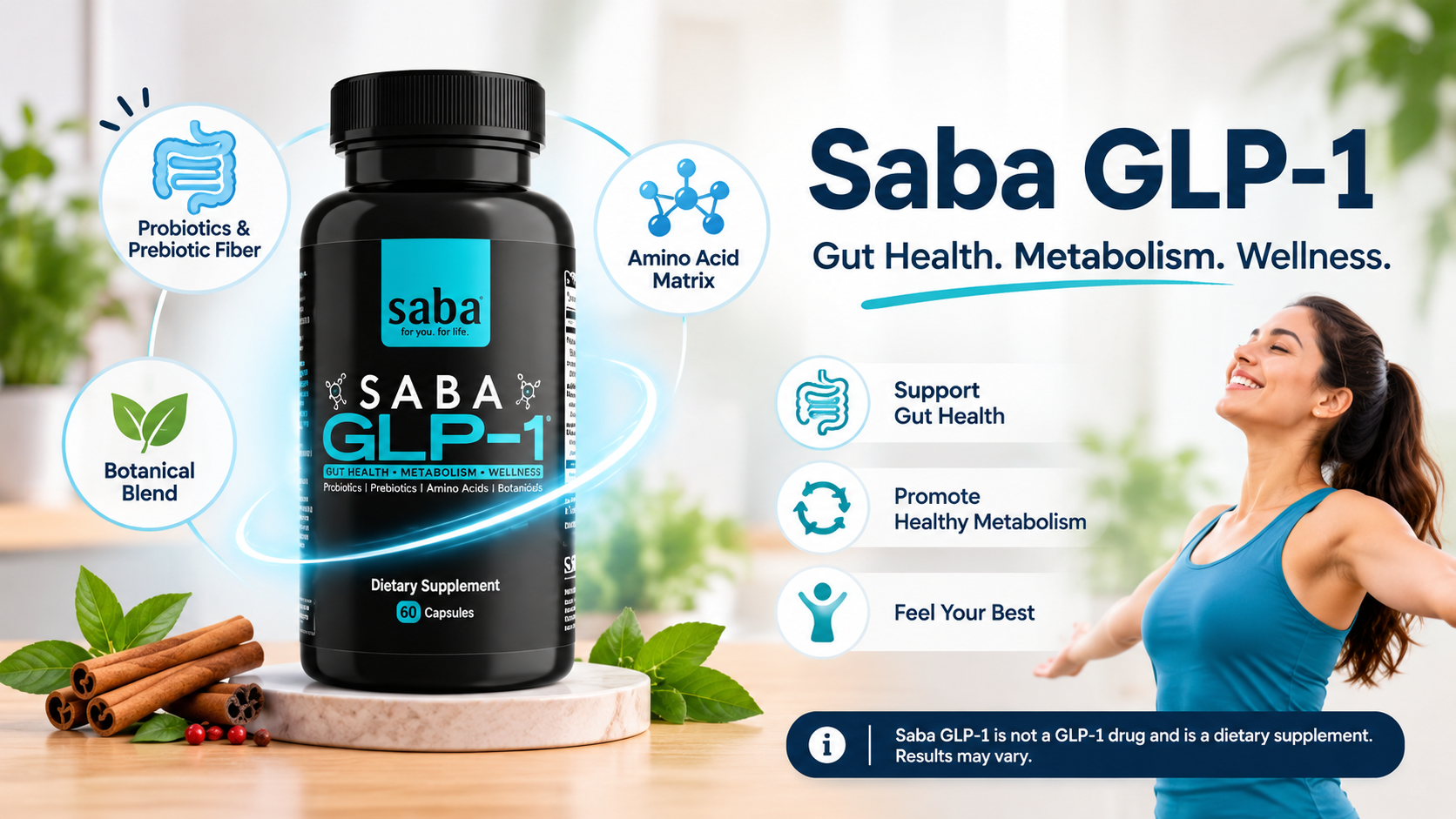
GLP-1 is everywhere right now, and many people are looking for supplements that support gut health and metabolism. Saba GLP-1 is one such dietary supplement. This guide walks through what’s in it, what each ingredient is generally known for, and what the research does and doesn’t show.
One important note up front: Saba GLP-1 is not a GLP-1 drug and is not a replacement for prescription medications such as semaglutide. It is a dietary supplement. As the FDA explains, supplements are regulated differently from drugs, and the NIH Office of Dietary Supplements notes that the FDA does not determine whether supplements are effective before they are marketed.
What Is GLP-1?
GLP-1 (glucagon-like peptide-1) is a hormone released by your gut after you eat. It plays a role in regulating blood sugar, slowing stomach emptying, and signaling fullness to the brain.
Prescription GLP-1 receptor agonists mimic this hormone and are used under medical supervision. Supplements are a different category: they can’t claim to work like these medicines. Their purpose is to support gut health, nutrition, and healthy lifestyle habits. For a deeper look at the gut side of this, see our guide to how gut health connects to metabolism.
The Three Components of Saba GLP-1
The brand describes its formula as a “3-Pillar” approach. Here’s a straightforward look at each pillar.
Pillar 1: Probiotics and Prebiotic Fiber
The formula includes three probiotic strains, Akkermansia muciniphila, Bifidobacterium infantis, and Clostridium butyricum, along with prebiotic fibers.
Research on the link between gut bacteria and metabolism is active and promising, but still early. For example, a 2019 randomized pilot study in Nature Medicine tested pasteurized Akkermansia muciniphila in overweight adults with insulin resistance. It reported improvements in some metabolic markers, but it was small (40 people enrolled) and did not test this product or measure GLP-1 itself. As the NCCIH points out, different probiotics can have different effects, so results for one strain don’t automatically apply to another. It would be inaccurate to call any probiotic a proven way to raise GLP-1. Want to learn more about this strain? Read What Is Akkermansia?.
Practical tip: New prebiotic fiber can cause temporary gas or bloating. Starting slowly is usually easier on the gut.
Pillar 2: Amino Acid Matrix
This blend contains Beta-Alanine, L-Glutamine, L-Leucine, L-Arginine, L-Phenylalanine, and Theobromine (from cacao).
- L-Leucine, L-Arginine, L-Glutamine: amino acids associated with muscle maintenance and protein metabolism.
- L-Phenylalanine: a protein building block and a precursor to certain neurotransmitters.
- Theobromine: a mild stimulant naturally found in cacao.
- Beta-Alanine: commonly used for exercise performance; it can cause harmless tingling (paresthesia) in some people.
These ingredients are best known in the context of nutrition and energy. Evidence for a direct effect on hunger or satiety is limited. You can check exact amounts on the Supplement Facts panel.
Pillar 3: Botanical Blend
This blend includes Berberine, Cinnamon Bark, Fenugreek, Capsimax (cayenne pepper extract), Ginger, Gymnema Sylvestre, and Hops Extract.
Several of these (berberine, cinnamon, fenugreek, and gymnema) have been studied in relation to blood sugar. Capsimax and ginger have small studies on thermogenesis and digestion. Results vary, and effects are generally modest.
Caution: Ingredients like berberine and fenugreek can interact with diabetes or blood pressure medications, and may cause stomach upset in some people. Keep in mind that, as NIH notes, “natural” doesn’t always mean safe.
What to Expect (and What Not To)
Any supplement tends to work best alongside:
- A balanced diet rich in protein and fiber (healthy eating tips)
- Regular movement and strength training
- Good sleep and stress management
No supplement can guarantee weight loss or blood sugar control, and results differ from person to person.
Who Should Talk to a Doctor First
Check with a healthcare provider before starting if you:
- Take medication for diabetes or pre-diabetes
- Are pregnant or breastfeeding
- Take blood thinners or blood pressure medication
- Have a gut or immune condition (such as IBS or IBD)
- Are under 18
Frequently Asked Questions
Does Saba GLP-1 work like Ozempic or Wegovy?
No. It is a dietary supplement, not a drug, and it is not an alternative to those medications.
Does it increase GLP-1 levels?
The brand’s goal is to support gut health. Showing that a specific product raises GLP-1 requires product-specific clinical data. If you have such data, link it here.
Are there side effects?
Fiber, probiotics, and berberine can cause bloating, gas, or loose stools in some people. If you feel unwell, stop use and consult your doctor. You can also report a reaction to the FDA through MedWatch.
How long before I notice anything?
It varies. Probiotics and lifestyle changes typically take weeks.
Learn More
See the full Saba GLP-1 product page and Supplement Facts, or explore more on our blog home and homepage.
Disclaimer: Results may vary. Saba GLP-1™ is not a GLP-1 drug, synthetic GLP-1, or GLP-1 agonist. These statements have not been evaluated by the U.S. Food and Drug Administration. This product is not intended to diagnose, treat, cure, or prevent any disease. Consult your healthcare provider before starting any new supplement.