Eating Less Isn’t Working Anymore- A Smarter Approach to Nutrition Support for Weight Loss
For years, weight loss advice has been painfully simple-
eat less, move more.
And yes — it works… for a while.
But if you’ve ever hit a plateau, felt constantly drained, or noticed your body getting softer instead of leaner, you’ve already seen the flaw in that advice.
Because at some point, your body stops cooperating.
That’s where nutrition support for weight loss becomes the missing piece.
What most people don’t realize is that your body isn’t just reacting to calories — it’s responding to the quality of nutrition you provide. When that quality drops, your body shifts from a fat-burning mode into a protection mode. And once that switch happens, progress slows down no matter how hard you try.
The Hidden Trade-Off- Fat Loss vs. Muscle Loss
Here’s what most people aren’t told-
When you cut calories without proper nutrition, your body doesn’t just burn fat — it also breaks down muscle.
That creates a chain reaction-
- Your metabolism slows down
- Your body burns fewer calories at rest
- Fat loss becomes harder over time
- Weight regain becomes more likely
So even if the number on the scale drops, your body composition may actually be getting worse.
Muscle is metabolically active tissue. The more you lose it, the less efficient your body becomes at burning calories — even when you’re not doing anything. This is why two people at the same weight can look completely different: one has preserved muscle, the other hasn’t.
When Appetite Drops, Nutrition Becomes a Problem
Many people — especially those following structured plans — experience reduced appetite.
At first, it feels like progress.
But over time, it creates a deeper issue:
you’re no longer eating enough to properly support your body.
This often leads to-
- Inconsistent protein intake
- Low fiber consumption
- Nutrient gaps that impact recovery
- Fatigue, brain fog, and low motivation
The real problem isn’t eating less — it’s under-fueling your system.
In real-world scenarios, this shows up as skipped meals, light snacking instead of balanced nutrition, or relying on convenience foods that lack essential nutrients. Over time, this creates a silent deficit — not just in calories, but in the building blocks your body actually needs.
A Smarter Approach-High-Impact Nutrition in Smaller Portions
If large meals aren’t realistic, forcing more food isn’t the answer.
The smarter approach is focusing on nutrient density — getting more value from what you eat.
Shift your mindset-
❌ “How little can I eat?”
✅ “How much nutrition can I get from what I eat?”
This is where effective nutrition support for weight loss comes in:
High-quality protein → helps preserve lean muscle
Functional fiber → supports fullness and digestion
Essential nutrients → maintain energy and metabolic function
This approach is especially useful for busy lifestyles where meal timing isn’t perfect. Instead of chasing ideal conditions, you create a system that works even on imperfect days — and that’s what makes results sustainable.
Why Protein Is Non-Negotiable During Weight Loss
Protein isn’t just for fitness enthusiasts — it’s critical for anyone trying to lose weight effectively.
Without enough protein-
- Muscle breakdown increases
- Hunger becomes harder to control
- Recovery and strength decline
With adequate protein-
- Your body is more likely to burn fat instead of muscle
- You stay full longer
- Your metabolism remains more active
Simply put: protein protects your progress.
Another important factor is consistency. It’s not just about hitting protein once a day — it’s about spreading it throughout your routine so your body always has access to what it needs to maintain and repair muscle tissue.
Fiber- The Missing Link in Appetite Control
If you’re struggling with cravings or inconsistent hunger, fiber may be the missing piece.
A well-balanced fiber intake can-
- Slow digestion and increase satiety
- Help stabilize blood sugar levels
- Reduce sudden cravings and overeating
Long-term benefits include-
- Better appetite regulation
- Improved gut health
- More consistent energy levels
Fiber also plays a subtle psychological role — when your hunger feels controlled, your decisions become easier. You’re not constantly negotiating with cravings, which makes sticking to a routine far more realistic.
Why Energy Levels Crash (Even When You’re “Doing Everything Right”)
One of the most frustrating parts of dieting is low energy.
But this isn’t about discipline — it’s about fuel.
When your body lacks proper nutrition:
- It shifts into conservation mode
- Daily energy output drops
- Workouts feel harder
- Motivation naturally declines
Your body isn’t failing you — it’s adapting.
This is often the point where people quit, assuming the plan isn’t working. In reality, the plan is incomplete. Without proper nutrition support for weight loss, your body simply doesn’t have the resources to keep performing.
Rethinking Weight Loss- From Restriction to Support
Most people approach weight loss through restriction.
But long-term success comes from supporting your body, not fighting it.
A smarter strategy focuses on-
- Preserving lean muscle mass
- Supporting metabolic health
- Maintaining steady energy levels
- Managing appetite without extremes
Instead of-
- Skipping meals
- Aggressive calorie cutting
- Ignoring hunger signals
Shift toward-
- Balanced, nutrient-rich intake
- Smarter portion control
- Consistent nutrition support for weight loss
This shift may seem small, but it changes everything. You move from a short-term mindset to a system that actually works with your body instead of against it.
Who Benefits Most from Nutrition Support?
This approach is especially useful if you:
- Struggle with low appetite
- Feel fatigued during a calorie deficit
- Want to prevent muscle loss
- Experience frequent cravings
- Are focused on sustainable, long-term results
It’s also highly relevant for people balancing work, family, and health goals — where perfect nutrition isn’t always possible, but smart nutrition still is.
The Real Goal-Sustainable Fat Loss, Not Just Weight Loss
Fast results can be motivating — but they’re often misleading.
What truly matters is:
- How much fat you’re losing
- How well you’re preserving muscle
- How your body feels and performs
- Whether you can maintain the results
Sustainable fat loss looks like:
- Steady, realistic progress
- Stable energy throughout the day
- Minimal muscle loss
- A routine you can actually maintain
Because at the end of the day, the best plan isn’t the most aggressive one — it’s the one you can stick with without burning out.
Support Your Body, Don’t Starve It
Weight loss isn’t just about eating less — it’s about fueling your body correctly while creating a deficit.
When you prioritize proper nutrition support for weight loss:
- Fat loss becomes more efficient
- Energy levels stay consistent
- Results last longer
The goal isn’t to do less.
It’s to do it smarter.
FAQs- Nutrition Support for Weight Loss
1. What is nutrition support for weight loss and why does it matter?
Nutrition support for weight loss focuses on providing your body with essential nutrients like protein, fiber, and vitamins while maintaining a calorie deficit, helping you lose fat without harming your metabolism.
2. Can nutrition support improve fat loss results?
Yes, proper nutrition support for weight loss helps your body burn fat more efficiently by preserving muscle mass and maintaining metabolic activity.
3. How does protein help during weight loss?
Protein helps prevent muscle loss, keeps you full longer, and supports a higher calorie burn, making it a key part of any effective weight loss plan.
4. Why is fiber important for appetite control?
Fiber slows digestion, stabilizes blood sugar, and reduces cravings, making it easier to manage hunger throughout the day.
5. What happens if I don’t get enough nutrients while dieting?
Lack of proper nutrition can lead to fatigue, muscle loss, slower metabolism, and eventually weight regain.
6. Is nutrition support necessary if I’m already eating less?
Yes, eating less without proper nutrition support can harm your body. It’s important to ensure you’re still meeting your nutritional needs.
7. How can I maintain energy levels during weight loss?
Balanced nutrition support for weight loss, including protein and essential nutrients, helps prevent energy crashes and supports daily performance.
8. Can poor nutrition slow down metabolism?
Yes, inadequate nutrition signals your body to conserve energy, which slows metabolism and makes fat loss more difficult.
9. What is the best way to avoid muscle loss while losing weight?
Combine adequate protein intake with strength training and proper nutrition support to preserve lean muscle mass.
10. How does nutrition affect long-term weight maintenance?
Sustainable nutrition habits help maintain metabolism, prevent fat regain, and support long-term health after weight loss.
11. Is fast weight loss harmful to the body?
Rapid weight loss often leads to muscle loss and nutrient deficiencies, making it harder to maintain results.
12. What are signs that my diet is not nutritionally balanced?
Common signs include low energy, constant hunger, poor recovery, mood swings, and stalled weight loss.
13. Can nutrition support reduce cravings?
Yes, proper nutrition with enough protein and fiber helps stabilize hunger hormones and reduce unnecessary cravings.
14. How often should I focus on nutrition support during weight loss?
Nutrition support should be consistent daily to maintain energy, muscle, and metabolic balance.
15. Is nutrition support for weight loss suitable for busy lifestyles?
Absolutely. Simple, nutrient-dense options can help maintain proper nutrition even with a hectic schedule.
GLP-1 Nutrition Support for Balanced Weight Loss (Vanilla Flavor)
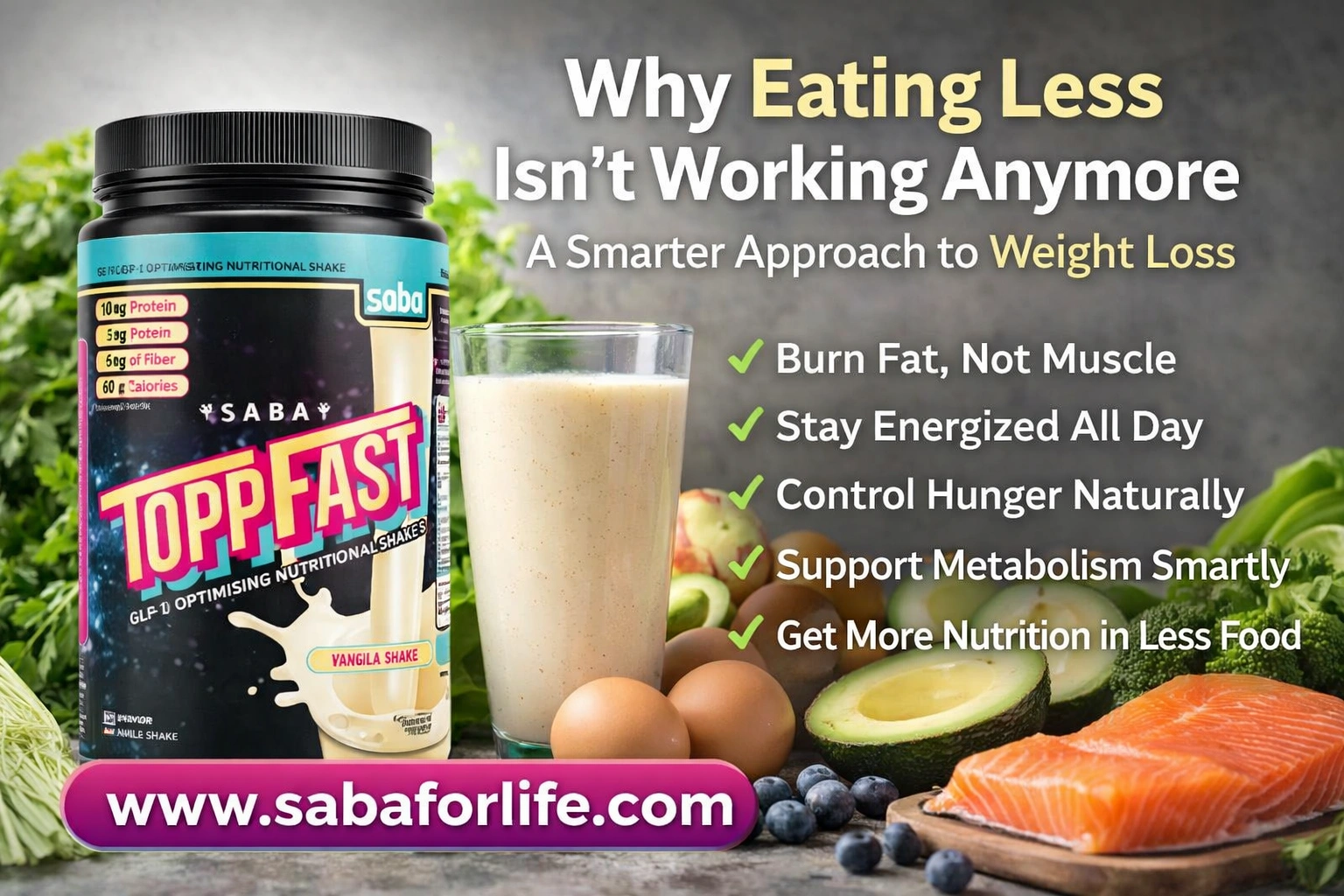
For individuals following GLP-1–based weight loss plans, maintaining proper nutrition can become challenging as appetite naturally decreases. This is where nutrition support for weight loss plays a critical role. Products like Saba ToppFAST™ (Vanilla Flavor) are designed as a protein and fiber-based nutrition solution that helps support lean muscle preservation, stabilize blood sugar levels, and improve appetite control without requiring large meals. With a smooth vanilla taste, it delivers essential nutrients in a convenient, easy-to-consume form, helping reduce fatigue, prevent muscle loss, and keep metabolism functioning efficiently—making your weight loss journey more balanced, sustainable, and easier to follow daily.
For more information about Saba and its wellness products, you can visit Saba’s official Facebook page or explore their website at www.sabaforlife.com to learn more about Saba GEM and its approach to supporting overall wellness.
Disclaimer:
Individual results may vary. Saba GLP-1™ is not a GLP-1 drug, synthetic GLP-1, or GLP-1 receptor agonist. This product has not been evaluated by the U.S. Food and Drug Administration (FDA). It is not intended to diagnose, treat, cure, or prevent any disease. For best use, follow the directions on the product label and incorporate it into a balanced diet and healthy lifestyle. Consult your healthcare professional before starting any new dietary supplement, especially if you have existing health conditions or are taking medications.