
You just finished eating. The meal wasn’t even that big. But within 20 minutes, your stomach feels tight, heavy, and twice its size. You look uncomfortable. You feel uncomfortable. And it happens often enough that you’ve started dreading meals instead of enjoying them.
Sound familiar?
Here’s the truth most people don’t hear: regular bloating isn’t something you just have to live with. It’s your digestive system sending a clear signal that something is off — and in most cases, the right supplements for bloating can make a real, noticeable difference.
Why Bloating Happens in the First Place
Before jumping into what helps, it’s worth understanding what’s actually going on.
Bloating is almost always caused by one of three things:
1. Undigested food fermenting in the gut
When your body doesn’t produce enough digestive enzymes to fully break down what you’ve eaten, the leftover food ferments in the lower intestine. Bacteria feed on it and produce gas — which is what causes that tight, uncomfortable pressure.
2. Imbalanced gut bacteria
Your gut microbiome contains trillions of bacteria. When the balance tips — too much harmful bacteria, not enough beneficial strains — digestion slows, gas increases, and bloating becomes a near-daily experience.
3. Low stomach acid
Counterintuitively, many people with chronic bloating actually have too little stomach acid, not too much. Low acid means proteins don’t get broken down early enough, which creates a backlog that the rest of your digestive system has to struggle through.
Each of these causes responds to different support — which is exactly why a single-ingredient supplement rarely fixes the problem completely.
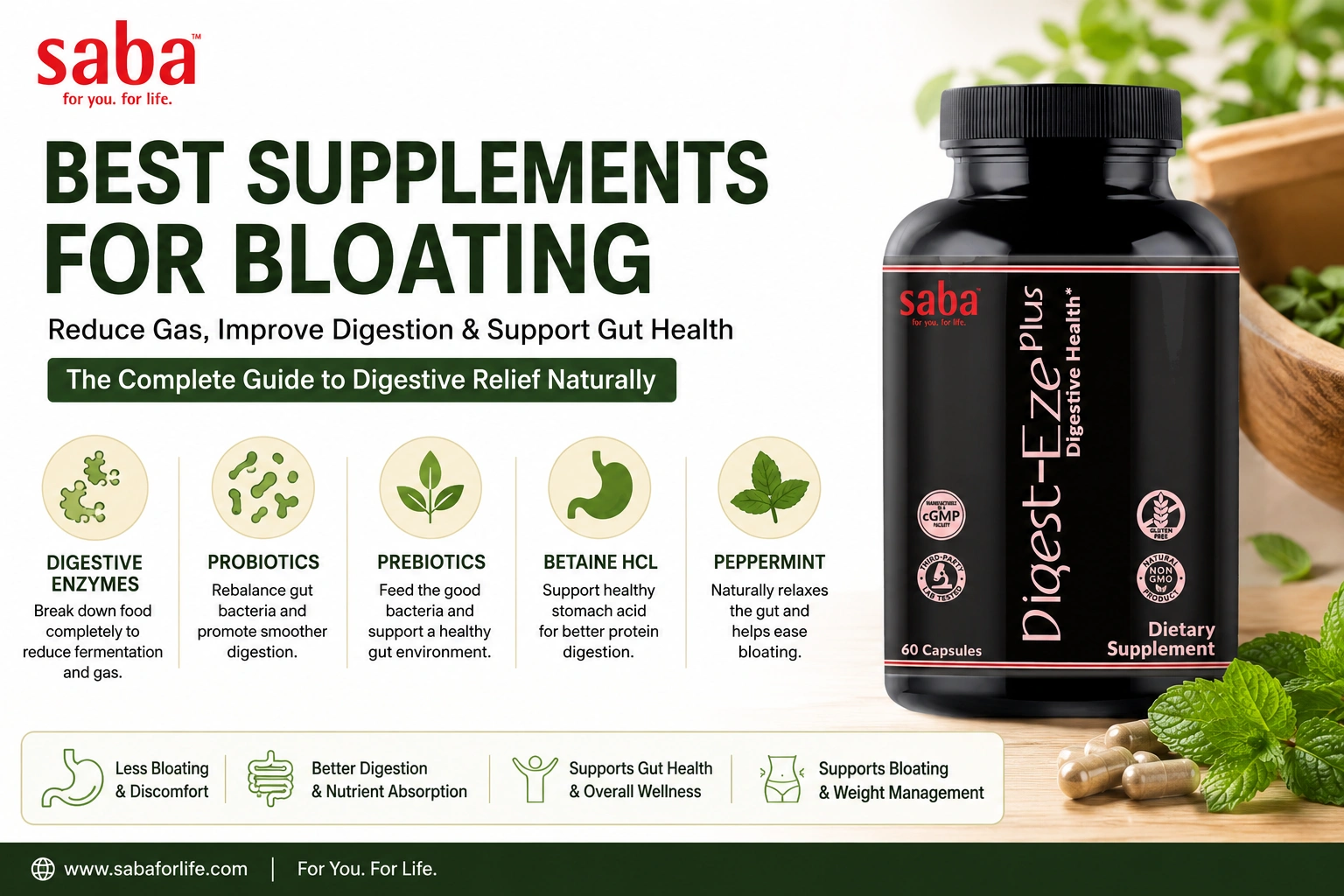
The Best Supplements for Bloating (And What Each One Does)
1. Digestive Enzyme Supplements for Bloating — The Foundation
If you only add one thing, make it a quality digestive enzyme supplement for bloating. Enzymes are the proteins your body uses to break food down — proteases for protein, amylases for carbohydrates, lipases for fats, cellulases for plant fiber.
When your body doesn’t produce enough of these on its own, food doesn’t get broken down completely. A broad-spectrum enzyme formula steps in to fill that gap — which means less undigested food sitting in your gut, less fermentation, and significantly less gas.
Who needs this most-
Anyone who bloats consistently after meals regardless of what they eat. Also especially helpful after age 35, when enzyme production naturally starts to decline.
Plant-sourced enzymes tend to work across a wider range of pH levels, meaning they’re active throughout the entire digestive process — not just in one section of your gut.
2. Probiotic Supplements for Bloating — Rebalance the Microbiome
Probiotic supplements for bloating work differently than enzymes. Rather than breaking food down, they address the bacterial environment in your gut.
When beneficial bacteria like Lactobacillus and Bifidobacterium strains are in healthy supply, food moves through your digestive tract more efficiently. The harmful bacteria that produce excess gas are kept in check. And your gut lining stays healthier, which reduces the inflammation that contributes to that distended, heavy feeling.
The key is consistency. Probiotics don’t work overnight — but for people with ongoing bloating, regular use tends to produce meaningful improvement within two to four weeks.
3. Prebiotics — The Partner Most People Skip
Prebiotics are the dietary fibers that feed your probiotic bacteria. And this is where a lot of people go wrong: they take a probiotic and wonder why results are slow — often because there’s nothing nourishing those bacteria once they arrive.
Dietary supplements for bloating that combine both prebiotics and probiotics consistently outperform either one alone. Think of it as seeding a garden (probiotics) and then actually watering it (prebiotics). Without both, the results are limited.
4. Betaine HCl — For the Root Cause Others Miss
This is the most underrated ingredient in the gut health space. Betaine Hydrochloride (Betaine HCl) helps restore healthy stomach acid levels — which matters more than most people realize.
Proper stomach acid activates your digestive enzymes, begins protein breakdown early, and kills off harmful bacteria before they reach your intestines. When acid is low, digestion is compromised from the very first step. The result: incomplete breakdown, fermentation, gas, and — you guessed it — bloating.
Including Betaine HCl as part of your bloating supplement stack addresses the problem at the source rather than just treating the symptoms downstream.
5. Peppermint — A Natural Gut Relaxant
Peppermint leaf (and peppermint oil) has one of the strongest evidence bases of any natural remedy for digestive discomfort. The active compound, menthol, relaxes the smooth muscles of the gastrointestinal tract — reducing cramping, easing the movement of gas, and calming that tight, pressured feeling in your midsection.
Multiple clinical studies have found peppermint oil supplementation significantly reduces IBS symptoms, including bloating and abdominal pain. It’s not just folk remedy territory — it’s genuinely well-researched.
When included in a best supplements for gut health and bloating formula, peppermint works alongside enzymes and probiotics to soothe while the structural work happens underneath.
Best Supplements for Bloating and Weight Loss — The Connection
There’s a reason best supplements for bloating and weight loss is one of the most searched combinations in the gut health space. The link is real — and it goes deeper than just looking less puffy.
When digestion improves:
- Nutrient absorption increases (so cravings driven by nutritional deficiency start to ease)
- Gut inflammation decreases (which is directly linked to fat storage, especially around the midsection)
- Energy improves (making movement feel easier and more natural)
- Blood sugar regulation steadies (reducing the spikes that trigger overeating)
None of this means a digestive enzyme or probiotic is a weight loss pill. But for many people, chronic bloating and stubborn midsection weight share the same root cause — a digestive system that isn’t functioning optimally. Fix the foundation, and both issues often start to shift together.
What to Look for in the Best Supplement for Bloating
With so many options on the market, here’s how to cut through the noise:
Look for-
- A broad-spectrum enzyme blend (protease, amylase, lipase, cellulase minimum)
- Both prebiotics AND probiotics — not just one
- Betaine HCl for stomach acid support
- A natural soother like peppermint leaf or ginger
- Plant-sourced enzymes for full digestive-tract coverage
- Transparent labeling with actual enzyme activity units listed
Avoid-
- Formulas with only one or two enzymes
- Proprietary blends that hide individual ingredient amounts
- Products with excessive fillers, artificial dyes, or unnecessary additives
- Anything that claims to work overnight or in a single dose
The best supplements for bloating work systematically — addressing the root causes of poor digestion rather than temporarily masking the symptoms.
Take Control of Bloating by Supporting Your Gut
Bloating is common. But common doesn’t mean inevitable. Most cases trace back to fixable problems — insufficient digestive enzymes, imbalanced gut bacteria, low stomach acid, or a combination of all three.
The right dietary supplements for bloating don’t just reduce the discomfort. They address why it’s happening — which means the improvement tends to be lasting rather than temporary.
Start with the foundation: enzymes, probiotics, prebiotics, and stomach acid support. Add a natural soother like peppermint. Stay consistent for at least three to four weeks.
Your gut is capable of working much better than it currently is. It just needs the right support.