




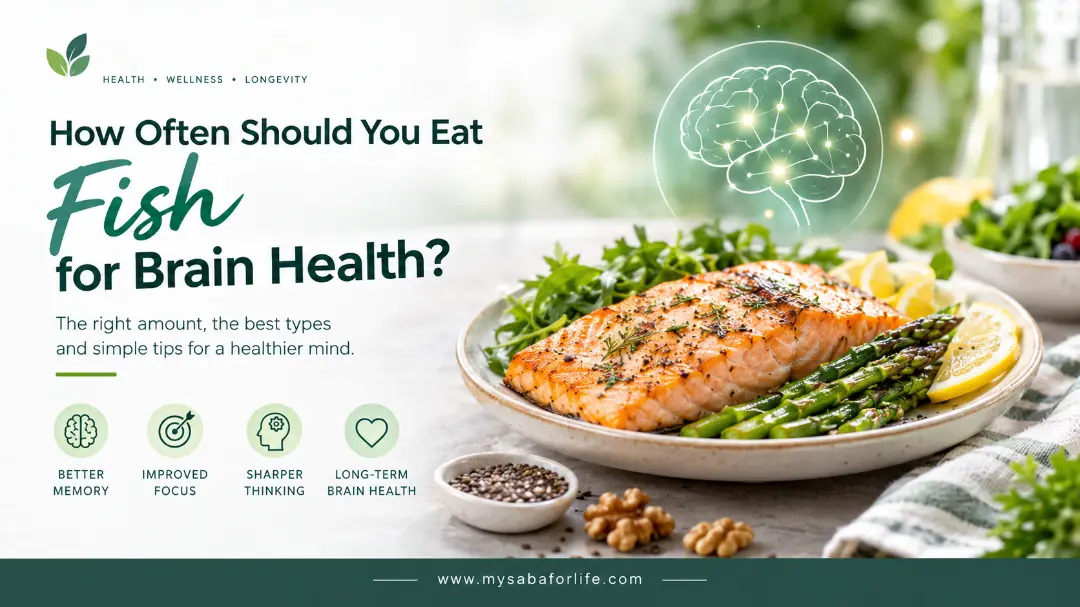
Fish for brain health- how much is enough?
If you want to look after your memory and focus in the long run, your plate matters more than you might think. Fish for brain health is one of the simplest food habits to build, yet many people eat far less of it than they should.
The good news: you don’t need to eat it daily. A dietitian’s recent advice points to a very doable target.
The Short Answer- Twice a Week
According to registered dietitian Natalie Rizzo, writing for TODAY.com, eating fatty fish such as salmon, sardines or tuna about twice a week supports brain health. That is the whole rule. Two meals, not fourteen.
Why Fatty Fish Matters for Your Brain
Fatty fish is the main dietary source of two omega-3 fats called EPA and DHA. Your brain uses DHA as a building material, which is why it keeps coming up in cognitive health research.
Plant foods like walnuts, chia seeds and flaxseeds do contain omega-3s, but in a form called ALA. Your body converts only a small share of ALA into EPA and DHA. So while these foods are healthy, they can’t fully replace fish.
Rizzo also points to a study of healthy adults: those who ate fish at least twice a week showed healthier-looking white matter, the brain’s internal communication network, than those who ate it less often. Other research links low DHA with cognitive decline.
Best Fish for Brain Health
- Salmon: rich in DHA, widely available, easy to bake or grill.
- Sardines: small, affordable and nutrient-dense.
- Tuna: a convenient option, especially canned.
- Trout and arctic char: milder alternatives for people who find salmon too strong.
Not a Fan of Fishy Flavor? Try This
Taste is the number one reason people skip seafood. A few ways around it:
- Start mild. Trout and arctic char taste gentler than salmon or sardines.
- Use canned tuna. Mix it with plain Greek yogurt instead of heavy mayo for a protein-rich salad.
- Add bold flavors. Lemon, garlic, herbs and olives balance richer fish nicely.
- Keep it simple. Roasting or grilling a fillet takes about 15 minutes.
A Simple Weekly Plan
- Day 1: Baked salmon with vegetables.
- Day 4: Tuna salad sandwich or a sardine toast.
That’s it. Two fish meals fit easily into a normal week, and consistency matters more than perfection.
What About Vegetarians?
If you don’t eat fish, keep adding walnuts, chia and flax for ALA. You can also ask your doctor or dietitian about algae-based omega-3 supplements, which provide DHA without fish.
FAQs-
1.How often should I eat fish for brain health?
Around twice a week is the commonly recommended amount, focusing on fatty fish.
2.Which fish is best for the brain?
Salmon, sardines and tuna are top choices because they provide EPA and DHA.
3.Can I get enough omega-3 from walnuts and flaxseeds alone?
They offer ALA, but the body converts only a small amount into EPA and DHA, so fish remains the main source.
4.Is canned fish as good as fresh?
Canned tuna and sardines are convenient, budget-friendly options that still count toward your weekly servings.
5.What is a mild fish for people who dislike strong flavors?
Trout and arctic char are gentler in taste than salmon.
6.Does fish prevent memory loss?
No single food can promise that. Fish is one part of a brain-friendly lifestyle that also includes sleep, exercise and a balanced diet.
7.Are there any risks to eating fish often?
Some fish contain more mercury than others, and pregnant women or people with medical conditions should check with their doctor about the right choices and amounts.
Final Thoughts-
Eating fish for brain health doesn’t need to be complicated. Aim for two servings of fatty fish each week, pick a flavor you enjoy, and keep it consistent.
Reference: TODAY.com