



The 3-3-3 Rule for Meals- How It Works and Why People Use It
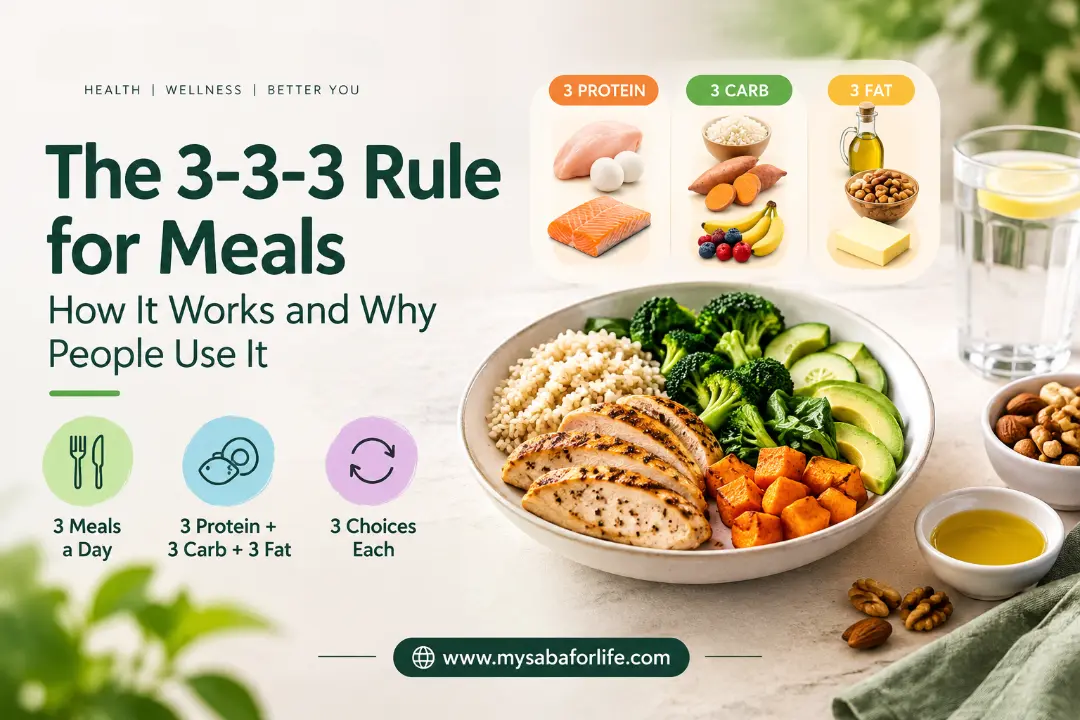
The 3-3-3 rule is a simple eating method built around three parts: eat 3 balanced meals a day, keep each meal built from 3 core elements — a protein, a carb, and a fat — and stick to a small rotation of about 3 choices for each of those elements.
Some versions add a fourth layer, like drinking water consistently through the day or fitting in a bit of weekly exercise, but the core idea stays the same: fewer decisions, more consistency, and meals that are easy to repeat without getting boring.
I came across this term while going through some trending nutrition searches this week, and honestly, it’s one of those rules that sounds stricter than it actually is.
It’s not a diet in the traditional sense — no calorie counting app required, no forbidden food list. It’s more of a structure people use when they’re tired of overthinking every meal.
How the 3-3-3 Method Actually Works
At its core, the method asks you to pick:
- 3 protein sources — chicken, eggs or egg whites, and fish are common picks
- 3 carb sources — rice, sweet potatoes, and fruit work well
- 3 fat sources — olive oil, nuts, and butter are typical choices
Green vegetables usually don’t count against your carb picks, so those stay a free-for-all. From there, every meal gets built using only combinations from those nine ingredients. Breakfast might be egg whites, sweet potato, and a bit of butter. Dinner might be chicken, rice, and olive oil. Same building blocks, different combinations, different seasoning.
It sounds repetitive on paper, but the number of actual meal combinations you can make from nine ingredients is bigger than people expect — and that’s kind of the point.
Why People Use It
The biggest reason this method works for a lot of people isn’t nutrition science, it’s psychology. When you’re only choosing from three options per category, you stop second-guessing what to eat. Meal prep gets faster, grocery lists get shorter, and tracking what you eat (if you do track) gets far more accurate, because there’s less room for guesswork about portion sizes or hidden ingredients.
For anyone who’s tried tracking food and felt like the numbers never quite matched how their body was responding, this method removes a lot of that uncertainty. Fewer variables mean it’s easier to tell what’s actually working.
A Different Version- The Daily 3-3-3
There’s another interpretation of the 3-3-3 rule that’s less about ingredients and more about daily habits:
- 3 meals a day, spaced out and balanced
- 3 bottles of water consumed by mid-afternoon
- 3 hours of movement or exercise spread across the week
This version is aimed less at people optimizing macros and more at people trying to build a baseline of consistency — eating regularly, staying hydrated, and moving enough without turning it into a rigid fitness plan.
Is the 3-3-3 Rule Good for Weight Loss?
It can be, but not because of anything magic about the number three. It works the same way most successful eating patterns do — by creating structure, reducing decision fatigue, and making portion control more natural. When meals are built from the same handful of whole-food ingredients, it’s harder to accidentally overeat processed or calorie-dense foods, simply because they’re not part of the rotation.
That said, it’s not a medically prescribed plan, and it’s worth adjusting the specific ingredients based on your own health needs, especially if you’re managing a condition like diabetes, where meal timing and composition matter more precisely.
Should You Try the 3-3-3 Rule for Meals?
The 3-3-3 rule isn’t a diet you follow forever — it’s a framework a lot of people use to simplify meal planning, especially when they’re just starting to pay closer attention to what they eat. Pick three proteins, three carbs, three fats, build your meals around them, and let repetition do the heavy lifting instead of willpower.
FAQs: About 3-3-3 Rule for Meals
1.Is the 3-3-3 rule the same as the 3x3x3 diabetic diet?
Not exactly. The 3x3x3 approach used in diabetes management divides each plate into three food groups (grains, protein/dairy, and vegetables/fruit) with three example foods per group. It’s a related idea but designed specifically around blood sugar management, not general meal simplicity.
2.How is the 3-3-3 rule different from the 2-2-2 rule?
The 2-2-2 rule is about food safety, not meal planning — refrigerate leftovers within 2 hours, eat them within 2 days, or freeze for up to 2 months.
3.Do I have to eat the exact same meals every day on the 3-3-3 method?
No. You’re rotating between three options per category, so you get variety through different combinations, cooking styles, and seasoning, even though the base ingredients stay consistent.
4.Is the 3-3-3 rule backed by research?
It’s more of a practical meal-planning framework than a clinically studied diet, though the underlying principle — simplifying food choices to improve consistency — is supported by general nutrition and behavior-change research.
Sources referenced: Stronger U, CMC Vellore (3x3x3 diet publication)