

Skinny Fat- Why You Look Thin but Carry More Body Fat
Your weight is normal. Your BMI is fine. Your doctor hasn’t flagged anything. And yet you feel soft, low-energy, and vaguely out of shape in a way that’s hard to explain to anyone. That gap between what the scale says and how you actually feel has a name: skinny fat.
What Does Skinny Fat Actually Mean?
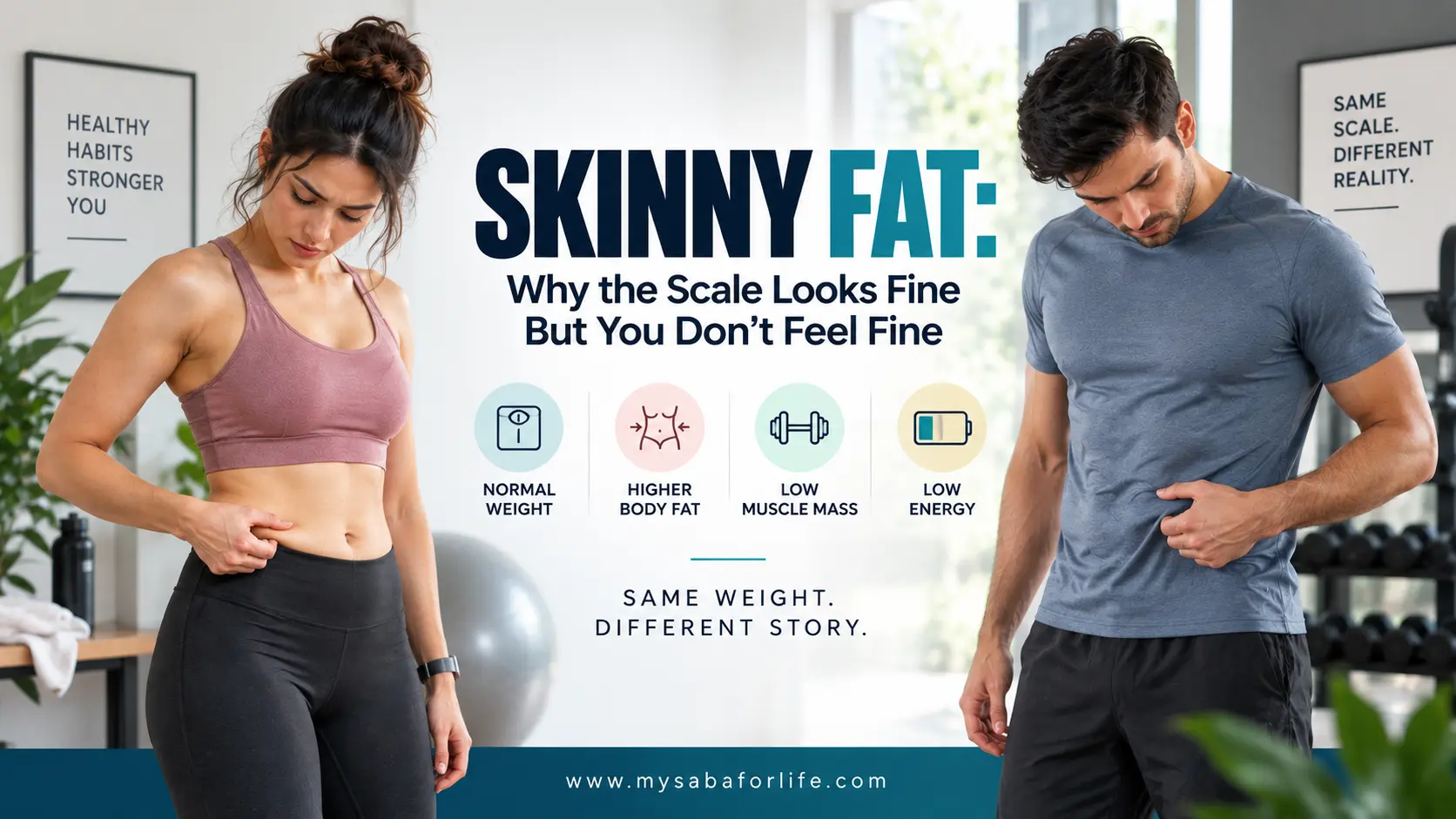
Skinny fat describes having a normal body weight and BMI, but a higher-than-ideal body fat percentage and relatively low muscle mass. On paper you look healthy. In practice, your body composition tells a different story.
This is why the scale is such a poor tool on its own — it measures total weight, not what that weight is made of. Two people at the same weight can have completely different amounts of muscle and fat, and very different metabolic health as a result.
What Does Skinny Fat Look Like?
There’s no single look, but common signs include a slim frame with little visible muscle tone, softness around the midsection despite thin arms and legs, and clothes fitting fine while you feel undefined without them. Many people describe looking “okay dressed, different undressed.”
Common Skinny Fat Symptoms
Beyond appearance, a few things tend to show up together:
- Low energy or fatigue that doesn’t match your activity level
- Feeling weak or noticing everyday tasks feel harder than they should
- Belly fat that persists even at a normal weight
- Slow progress from exercise, since there’s little muscle to build on
- Blood sugar or cholesterol markers that come back borderline despite a normal weight
What Causes It
Skinny fat usually develops from a combination of factors, not one mistake:
Chronic under-eating or extreme dieting. Losing weight too aggressively burns through muscle alongside fat, leaving you lighter but softer than before.
Cardio-only exercise routines. Cardio supports heart health but does little to build or preserve muscle, which is what actually shapes body composition.
Not enough protein. Without adequate protein, the body struggles to maintain muscle, even if you’re exercising.
Age and hormonal shifts. Muscle mass naturally declines starting in your 30s, and hormonal changes during perimenopause or with declining testosterone can accelerate the shift toward fat storage.
A sedentary lifestyle. Long periods of sitting, even with occasional workouts, contribute to gradual muscle loss over time.
How to Tell If You’re Skinny Fat or Just Fat
The distinction comes down to where your weight falls relative to your body fat percentage. If your weight and BMI are in a normal range but a body fat scale, calipers, or DEXA scan shows a higher-than-expected body fat percentage with low muscle, that’s skinny fat. Being simply “fat” usually means both weight and body fat percentage are elevated together. A skinny fat calculator (using body fat percentage plus BMI) can give a rough estimate, but an InBody scan or DEXA scan is far more accurate than any online calculator.
Skinny Fat in Women vs. Men
The pattern shows up a little differently by sex. Skinny fat in women often appears as softness around the abdomen, hips, and thighs despite a normal or low weight, frequently tied to lower muscle mass and hormonal factors. Skinny fat in men tends to show up as a soft midsection paired with thin arms and legs — often described as looking “fit in a shirt, not fit without one.” In both cases, the underlying fix is the same: build muscle, don’t just chase a lower number on the scale.
Losing Inches But Not Weight? This Is Related
If you’re exercising consistently and your clothes fit differently but the scale hasn’t moved, you’re likely in the middle of the exact process that leads out of skinny fat: losing fat while gaining muscle. Since muscle is denser than fat, this trade can leave your weight nearly unchanged while your body composition genuinely improves. This is one of the most common reasons people feel like their body looks different but “the scale isn’t confirming it.”
Is Skinny Fat Dangerous?
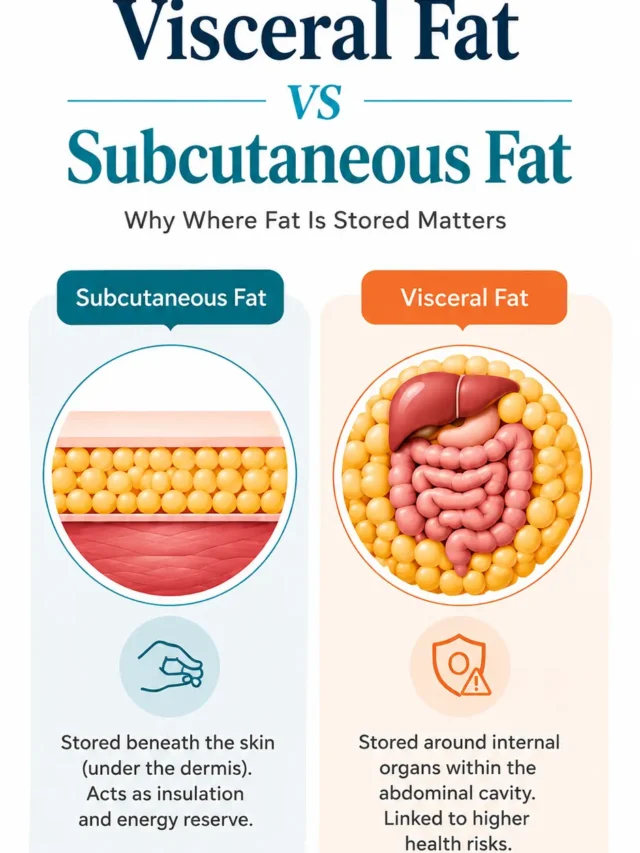
It’s worth taking seriously. A normal weight can mask higher visceral fat — the type stored around internal organs that’s linked to insulin resistance, elevated cholesterol, and cardiovascular risk. Because the scale looks fine, these issues often go undetected longer than they would in someone whose weight raised a flag.
How to Fix Skinny Fat
The answer is almost never “lose more weight.” That usually makes it worse.
Build muscle first. Strength training two to three times a week is the single most effective change, since adding muscle directly improves body composition and metabolic rate.
Eat enough protein. Protein supports muscle maintenance and growth, and helps with appetite regulation.
Stop cutting calories aggressively. Severe restriction accelerates muscle loss. A moderate, sustainable intake works far better here than another round of dieting.
Prioritize sleep. Poor sleep disrupts recovery and the hormones that support muscle maintenance.
Support metabolic health. Since skinny fat is often tied to blood sugar and metabolic function rather than weight alone, supporting that side matters too. Saba GLP-1 is formulated to support balanced blood sugar and metabolic function alongside training and nutrition changes.
Measure differently. Track how clothes fit, strength gains, and waist measurements rather than relying only on the scale — body recomposition often shows little weight change even when real progress is happening.
FAQs- Skinny Fat What You Need to Know
1.How do I know if I’m skinny fat?
If your weight and BMI are normal but you feel soft, lack visible muscle tone, and carry noticeable belly fat, that pattern usually points to skinny fat.
2.Is skinny fat worse than being overweight?
Not necessarily worse, but it can be riskier in one way: normal weight often means the underlying metabolic issues go unnoticed for longer.
3.How long does it take to fix skinny fat?
Most people see meaningful changes in body composition within three to six months of consistent strength training and adequate protein intake.
4.Should I lose weight if I’m skinny fat?
Usually not. The goal is adding muscle and improving body composition, not dropping more weight, which often makes the problem worse.
5.Can you be skinny fat and still be healthy?
It’s possible, but worth checking. Blood work looking at blood sugar, cholesterol, and inflammation markers gives a clearer picture than weight alone.
Building a Stronger, Healthier Body
Being skinny fat isn’t a failure of discipline — it’s usually the result of years of cardio-heavy routines, under-eating, or simply aging without strength training. The fix isn’t more restriction. It’s building what’s missing.