




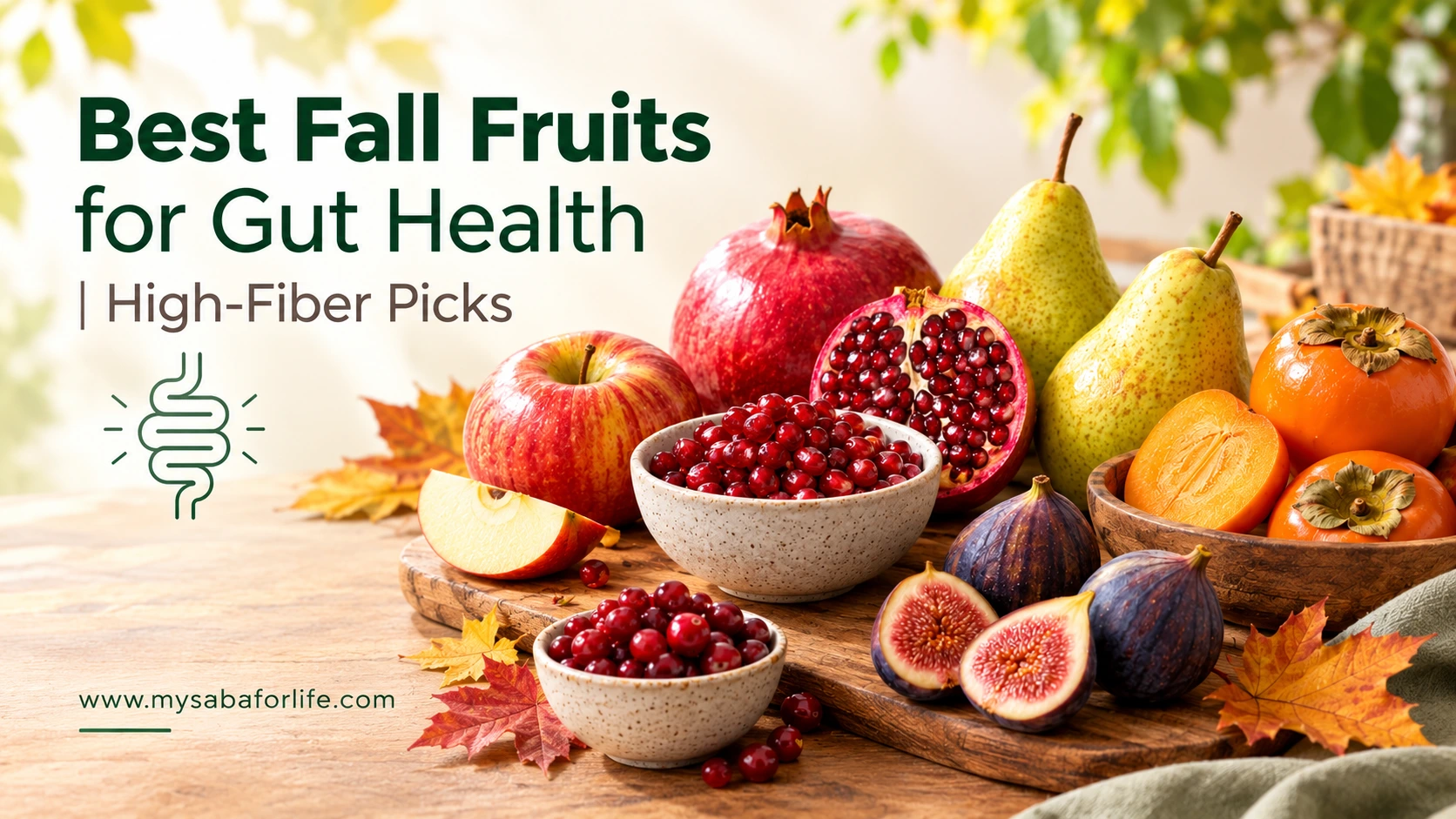
Walk into a grocery store in October and the produce section changes. Apples pile up in crates, pears get their own display, and there are pomegranates and persimmons that many shoppers walk right past. It’s a good time to pay attention, because the fall fruits for gut health are some of the easiest fiber upgrades you can make all year. Here’s what to buy, how much fiber you get, and how to eat more of it without a bloated stomach.
Why Fiber Matters for Your Gut
Your gut bacteria live on the fiber you don’t digest. Soluble fiber, like the pectin in apples and pears, dissolves into a gel and gets fermented by bacteria into short-chain fatty acids, which help nourish the cells lining your colon. Insoluble fiber, found mostly in skins, adds bulk and keeps things moving. Fruit delivers both. Most adults fall short of the roughly 25 to 38 grams a day recommended by the Dietary Guidelines for Americans, so seasonal fruit is a practical place to close the gap.
Fiber in Fall Fruits at a Glance
| Fruit | Typical serving | Approx. fiber | Easy way to eat it |
|---|---|---|---|
| Apple (with skin) | 1 medium | 4 g | Sliced with nut butter |
| Pear | 1 medium | 5 to 6 g | Baked or raw |
| Pomegranate seeds | 1 cup | 7 g | On yogurt or salads |
| Persimmon (Fuyu) | 1 fruit | 5 to 6 g | Sliced like an apple |
| Fresh figs | 2 medium | 3 g | With ricotta or oats |
| Cranberries (fresh) | 1 cup | 4 g | Cooked into oatmeal |
Amounts are approximate and vary by size. You can look up exact numbers in USDA FoodData Central.
A Closer Look at Each Fruit
Apples are the everyday workhorse. The flesh gives you pectin, and the peel adds insoluble fiber, so wash them well and eat them with the skin on.
Pears usually edge out apples on fiber. They also contain sorbitol, a natural sugar alcohol that can soften stools, which is helpful if you’re backed up and less welcome if your stomach is sensitive.
Pomegranates keep their fiber in the seeds, so eating the seeds beats drinking the juice. Early research suggests gut microbes convert pomegranate polyphenols into compounds called urolithins, though scientists are still working out what that means for health.
Persimmons come in two types. Fuyu persimmons can be eaten firm, while Hachiya persimmons need to be completely soft or they taste chalky and bitter.
Figs are a long-time favorite for regularity, and small studies support that reputation. Dried figs are concentrated in sugar, so keep the portion modest.
Cranberries are tart, which is why most people only meet them as sauce. Cook fresh ones into oatmeal with a little maple syrup and you get fiber without the sugar load of canned sauce.
How to Eat More Without the Bloat
Adding a lot of fiber overnight is the fastest way to feel miserable, so go slowly. Add one extra serving of fruit for a few days, drink more water, and then build from there.
Pairing fruit with protein or healthy fat, like Greek yogurt, cheese, or nuts, slows how fast the sugar hits your bloodstream, and a short stroll afterward helps too. We cover that in our guide to walking after eating. Rotating different fruits matters as well, since different fibers feed different bacteria. Variety beats eating the same apple every day.
Fruit Isn’t the Whole Picture
Fall fruits for gut health work best alongside vegetables, beans, whole grains, nuts, and seeds. On busy weeks when produce slips, some people use a greens and probiotic blend like Saba N-Fuse™ to fill gaps, though it’s meant to complement whole foods, not replace them. If you’re wondering whether your digestion needs attention, read about the signs of an unhealthy gut microbiome.
FAQs- Fall Fruits for Gut Health
1.What fall fruits are best for gut health?
Apples, pears, pomegranate seeds, persimmons, figs, and cranberries all provide fiber and plant compounds that support digestion.
2.Which fall fruit has the most fiber?
Pomegranate seeds lead per cup at about 7 grams, with pears and persimmons close behind per piece.
3.Are fall fruits good for constipation?
Often, yes. Pears, figs, and apples with the skin on are common choices because of their fiber and, in the case of pears, sorbitol. Drink plenty of water alongside them.
4.Can too much fruit cause bloating?
It can, especially if you increase fiber quickly. Build up gradually and notice which fruits your gut tolerates best.
5.Is it better to eat whole fruit than drink juice?
Whole fruit, almost always. Juice removes most of the fiber and delivers sugar faster.
Conclusion- Make Fall Fruits for Gut Health a Daily Habit
You don’t need an elaborate plan. Keep a bowl of apples and pears on the counter, toss pomegranate seeds on breakfast, and rotate in a persimmon or a few figs when you see them. Eating fall fruits for gut health is an easy, inexpensive way to support digestion while they’re at their best.