



Walking After Eating- Does It Really Lower Blood Sugar?
You finish a meal and instead of sitting down, you go for a short walk. It sounds too simple to matter — but walking after eating is backed by real research, and the reason it works is straightforward.
Why Walking After Eating Works
When you eat, carbs break down into glucose, which enters your bloodstream. Normally, insulin does most of the work moving that glucose into your cells. But active muscles can pull glucose directly from your blood for fuel — no extra insulin needed. That’s why walking after eating blunts the spike before it fully happens, instead of managing it after the fact.
Research from UCLA Health found that even a five-minute walk after a meal measurably lowered blood sugar compared to sitting still. Other findings, including work published through Diabetes Care, show that brisk 15-30 minute walks after meals can meaningfully reduce post-meal glucose spikes.
How Long Should You Walk After Eating?
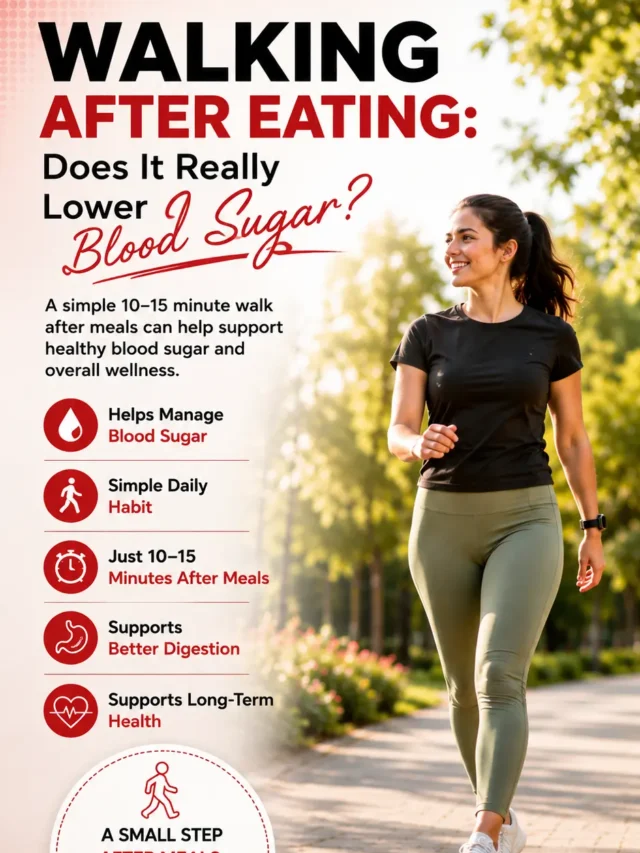
Shorter than most people assume. Most research points to 10-15 minutes as the sweet spot, though even a 5-minute walk after eating has shown a measurable effect. You don’t need a structured workout — just consistent, easy movement.
Does Walking Lower Blood Sugar Immediately?
Yes, largely. Because active muscles pull glucose from the blood in real time, effects can begin within minutes. This is different from most lifestyle changes, where benefits build slowly — walking after a meal works almost right away, which is why it’s such a popular, low-effort habit for blood sugar control.
Best Time to Walk After a Meal
Timing matters more than people expect. Starting your walk within 60-90 minutes after eating — while food is still digesting and glucose is entering your bloodstream — works better than walking a few hours later, once blood sugar has already settled on its own.
Can Walking 30 Minutes a Day Lower Blood Sugar Long-Term?
Over time, yes. A single post-meal walk mainly blunts that meal’s spike. But doing this consistently, after most meals, adds up to fewer and smaller spikes overall — which is part of why walking after dinner and other meals is often recommended as a daily habit rather than an occasional one.
Does Walking After a Meal Reduce Insulin Resistance?
Indirectly, yes. Every time your muscles absorb glucose without relying heavily on insulin, you reduce the workload on your insulin response. Repeated over weeks, this can improve how efficiently your body uses insulin — a key piece of managing insulin resistance alongside diet and sleep. (See our guide on insulin resistance symptoms women often ignore for more.)
Do You Need to Walk Fast for It to Work?
No. An easy, conversational pace is enough. The benefit comes from muscle activity itself, not intensity or distance covered.
FAQs- Walking After Eating
1. Is walking after eating good or bad for digestion?
It’s generally good. Light walking supports digestion and can reduce bloating, as long as the pace stays easy rather than intense.
2.What’s the minimum walking needed for diabetes management?
Even 2-5 minutes shows a measurable effect, though 10-15 minutes is the range most consistently linked to meaningful blood sugar improvement.
3.Can walking after eating help during pregnancy?
Light walking after meals is generally considered safe and beneficial for blood sugar during pregnancy, but always check with your doctor for your specific situation.
4.Does a 10-minute walk work as well as medication?
No — walking supports blood sugar management but isn’t a replacement for prescribed medication. It works best alongside medical guidance, not instead of it.
5.What if I can’t walk right after eating?
Any movement within a couple of hours still helps. The closer to the meal, the stronger the effect, but a delayed walk is still better than none.
Why a Short Walk After Meals Can Make a Difference
Walking after eating isn’t a cure, but it’s one of the simplest, most consistently supported habits for smoothing out blood sugar spikes. Ten to fifteen minutes, at an easy pace, soon after your meal — that’s what the research points to. Low effort, free, and something you can start with your very next meal.
This article is for informational purposes only and is not a substitute for professional medical advice.